
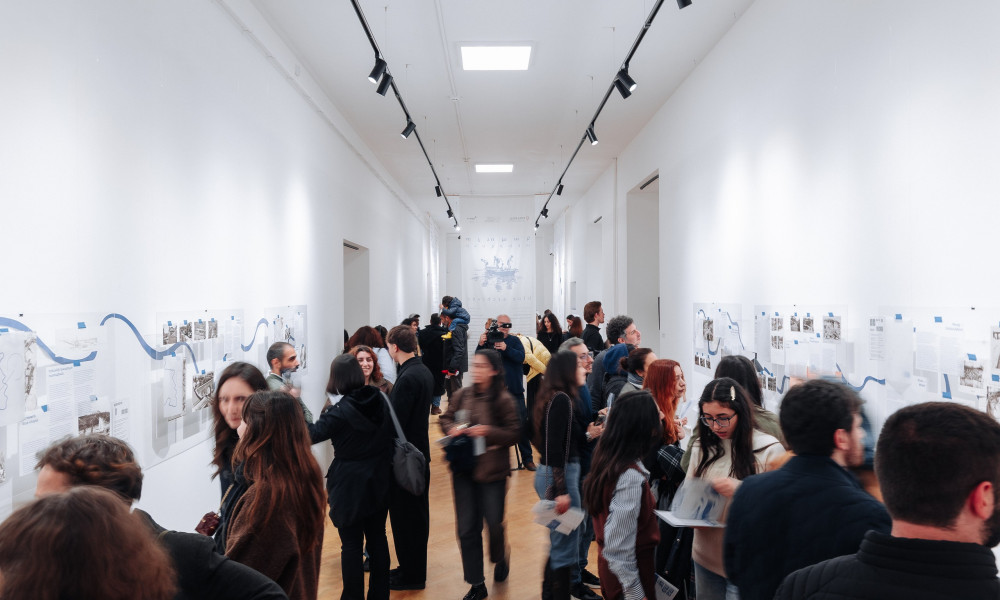
Architectural and spatial research, photo archives, oral histories, cartographic materials, and contemporary artworks come together in Blue Archives, a pavilion opened by CSN Lab on February 12 in the main hall of the Yeghishe Charents Museum of Literature and Arts in Yerevan. The opening brought together hundreds of guests, as well as the CSN Lab team, the Deputy Head of Mission of the Embassy of Canada Aaron Coe, and the museum's director, Syuzanna Khodjamiryan.
Blue Archives explores Yerevan's water heritage and the memory of water architectures that have disappeared or faded from the city over recent decades. Curated and authored by Arsen Abrahamyan and Tigran Amiryan, together with art director Harutyun Tumaghyan, the pavilion presents six interconnected research and artistic projects developed over many years around the memory of water and the transformation of urban water bodies. The project is the first large-scale cross-disciplinary initiative in Armenia to address water landscapes and infrastructures as part of both the ecological environment and the cultural memory of the city, while also emphasising the need for careful stewardship of water and advocating for its democratic distribution.
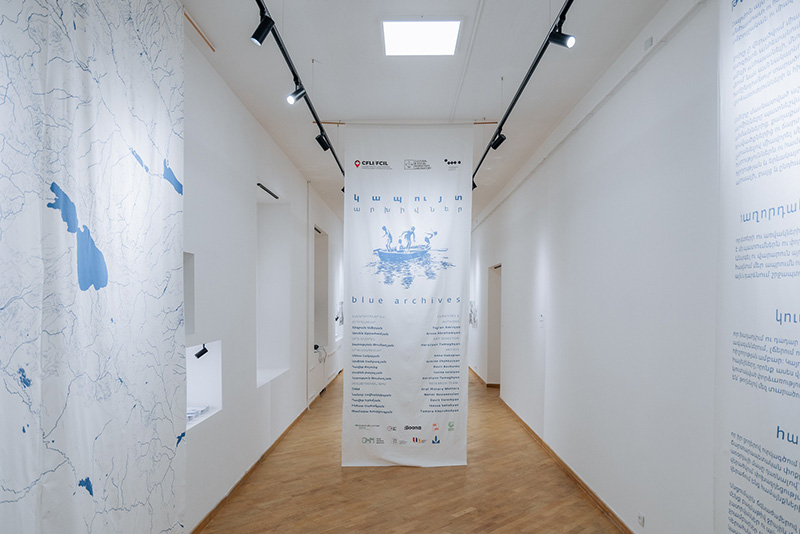
During the project's implementation, the CSN Lab team was joined by young architects Tamara Khurshudyan and Inesa Sahakyan, under the leadership of Davit Yeremyan. Archival research was carried out by the Lab's research team, while project partners Oral History Matters (OHM), led by Hurig Attarian, collected and analysed oral histories of local communities about the city's water spaces.
The pavilion is structured as a series of conceptual chapters: water as a shared body that connects communities and countries of the region; water as a flow of communication linking different territories and communities; water as a site of accumulation that brings together environmental experience and memory; and water as a space of exchange that participates in the everyday life and practices of individuals and communities through small architectural forms that enable social interaction, such as fountains, swimming pools, and bathhouses.
Blue Archives also addresses environmental issues through literary works and cultural memory. The exhibition includes a literary installation reflecting transformations of Yerevan's urban landscape and the cultural memory shaped around them during different stages of the city's development. The installation is woven around prose works by Aram Pachyan, Aghasi Ayvazyan, Axel Bakunts, and Mkrtich Armen.
A separate section of Blue Archives, titled Immersed, brings together visual artworks by five contemporary Armenian artists: Armine Shahbazyan, Anna Hakobyan, David Kochunts, lusine talalyan, and Har Toum. These works analyse visual archives of water bodies from a contemporary perspective and reflect, through personal memory, on the multiple roles of water in the environment and everyday life. The exhibition also emphasises gender-related issues and philosophical reflections connected to water spaces, particularly through the Mamour project by CSN Lab researcher Nanor Hovhannisyan, the first hydrofeminist project in Armenia.
The exhibition concludes with the video installation The Right of Water, which considers water as a key element of the ecological environment, cultural heritage, and everyday life. At the same time, the work proposes looking at water not only as a resource or object but also as a subject within the context of the rights of nature and contemporary ecological debates.
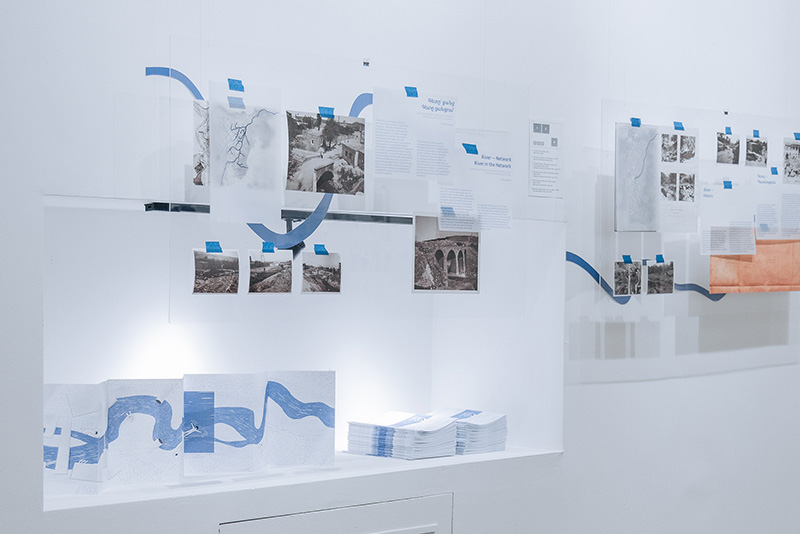
The pavilion brings together and analyses a wide range of visual materials—photographs and documents from multiple archives, including the National Archives of Armenia and the Yerevan History Museum. In addition, analytical videos by Mari Chakryan, Tigran Amiryan, and Arsen Abrahamyan are presented in the pavilion, developed in collaboration with Boon TV.
Blue Archives forms part of a broader long-term research and artistic project by CSN Lab. The project will be presented in March in Germany at the Leipzig Book Fair, and a book titled Blue Yerevan is scheduled for publication at the end of 2026. The team also plans to present the project at international festivals and biennials.
The pavilion is part of CSN Lab's ongoing cross-disciplinary work and was realised with the support of the Embassy of Canada in Armenia through the CFLI program, as well as the Yerevan office of the Heinrich Böll Foundation. It also includes components developed with the support of the Goethe-Institut, the Danish Cultural Institute, the Women's Fund Armenia, and Boon TV.
photo: Daniil Primak