
What happens to a city when its water disappears, not only from its landscape, but also from its memory?
Within the official programme of COP17, CSN Lab’s interdisciplinary research project Blue Yerevan brings this question into the international discourse on biodiversity. Developed through years of research, the project examines the transformation of Yerevan’s blue spaces and water infrastructures: from covered rivers to artificial lakes and public pools that have disappeared or been transformed, as well as fountains, springs, reservoirs, and other water infrastructures that shape both the ecology of the city and the everyday lives of its inhabitants.
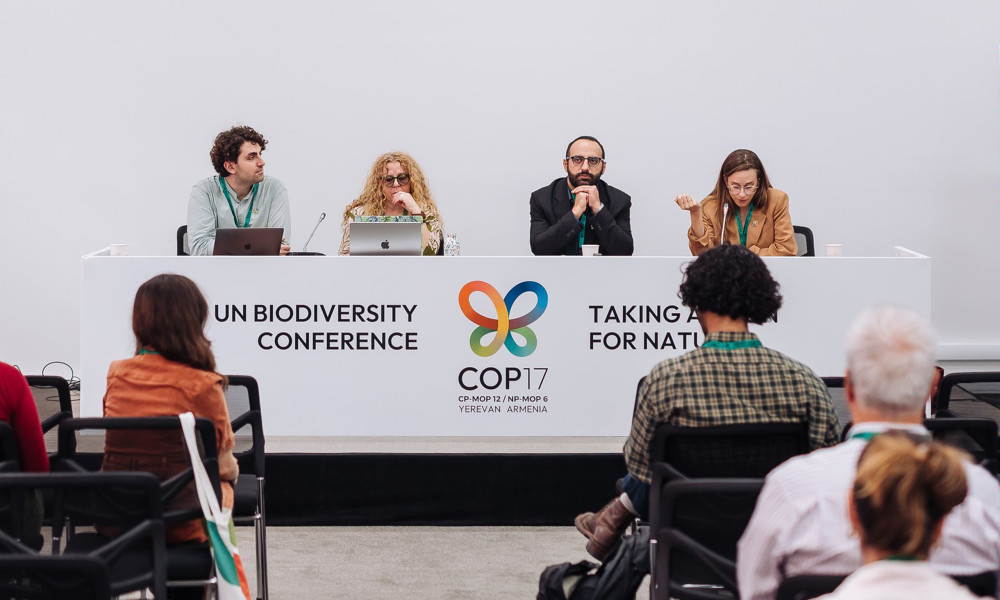
At the COP17 Blue Zone, Blue Yerevan proposed thinking about biodiversity through environmental anthropology and culture. This perspective made it possible to approach water not only as a natural resource, but also as an agent that actively shapes the environment and community life, social and cultural memory, and even the politics of space-making.
By bringing together environmental research, architectural and urban studies, anthropology, memory studies, and oral history, Blue Yerevan offers a perspective through which to explore the different layers of Yerevan’s water narratives and to read the relationships formed between water, the city, and its inhabitants.
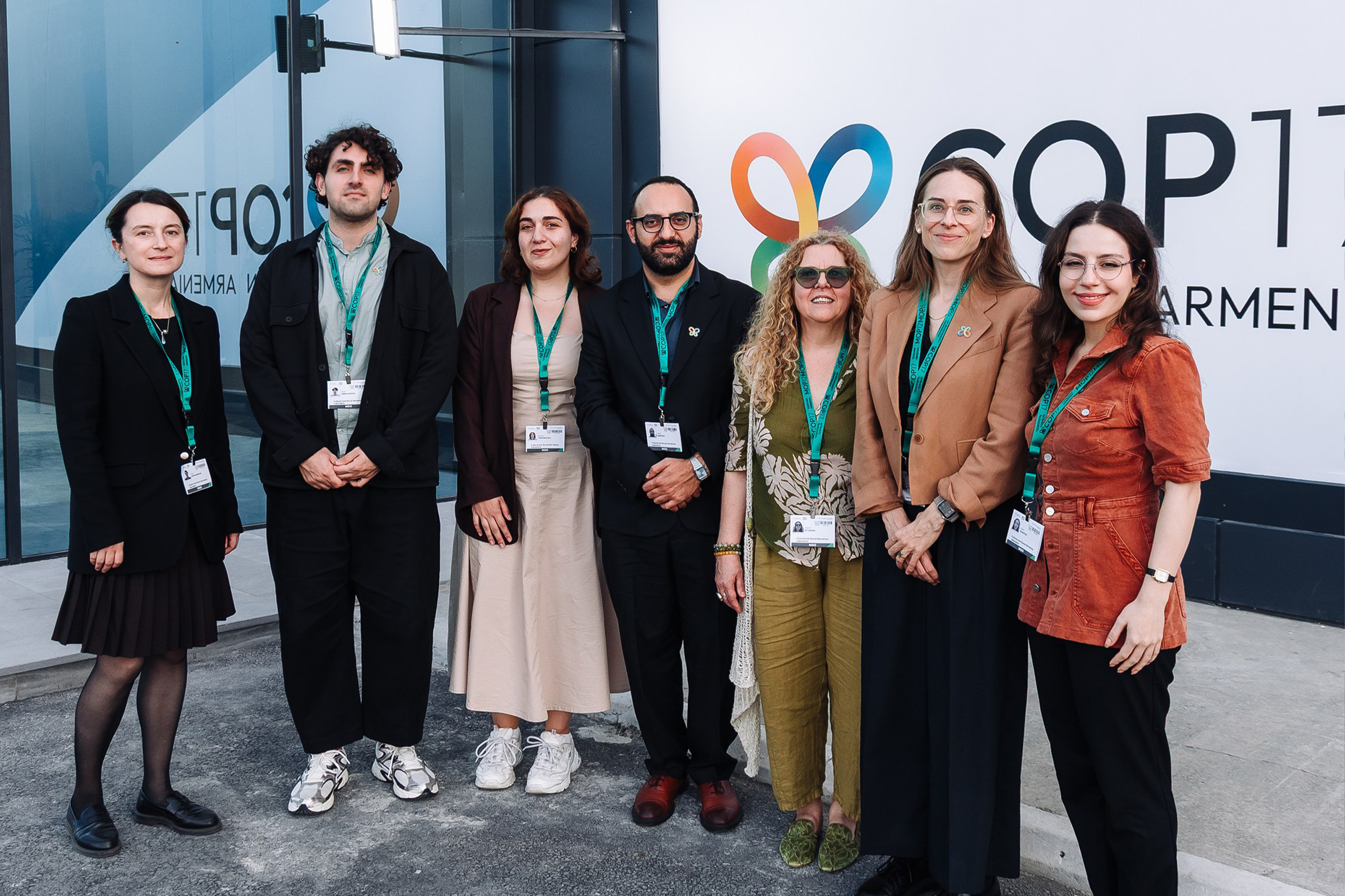
The project presentation brought together its authors Tigran Amiryan (CSN Lab), Arsen Abrahamyan (CSN Lab), Hourig Attarian (OHM), moderator Sonja Schiffers (Heinrich Böll Foundation South Caucasus Regional Office), and an international audience, creating an opportunity to present the project’s different research directions and discuss them within the broader context of biodiversity, the urban environment, and the politics of water.
Tigran Amiryan opened the conversation by presenting the project’s methodological framework and its interconnected approaches to reading water spaces: river networks as flows of communication, lakes and reservoirs as community-forming waters, and fountains and pools as shared waters of exchange. Reflecting also on the symbolic significance of the project’s title, Amiryan emphasised the need to reread the “pink” or “stone” Yerevan from a decolonial perspective and, through this, to rethink urban space, collective practices, and memory.
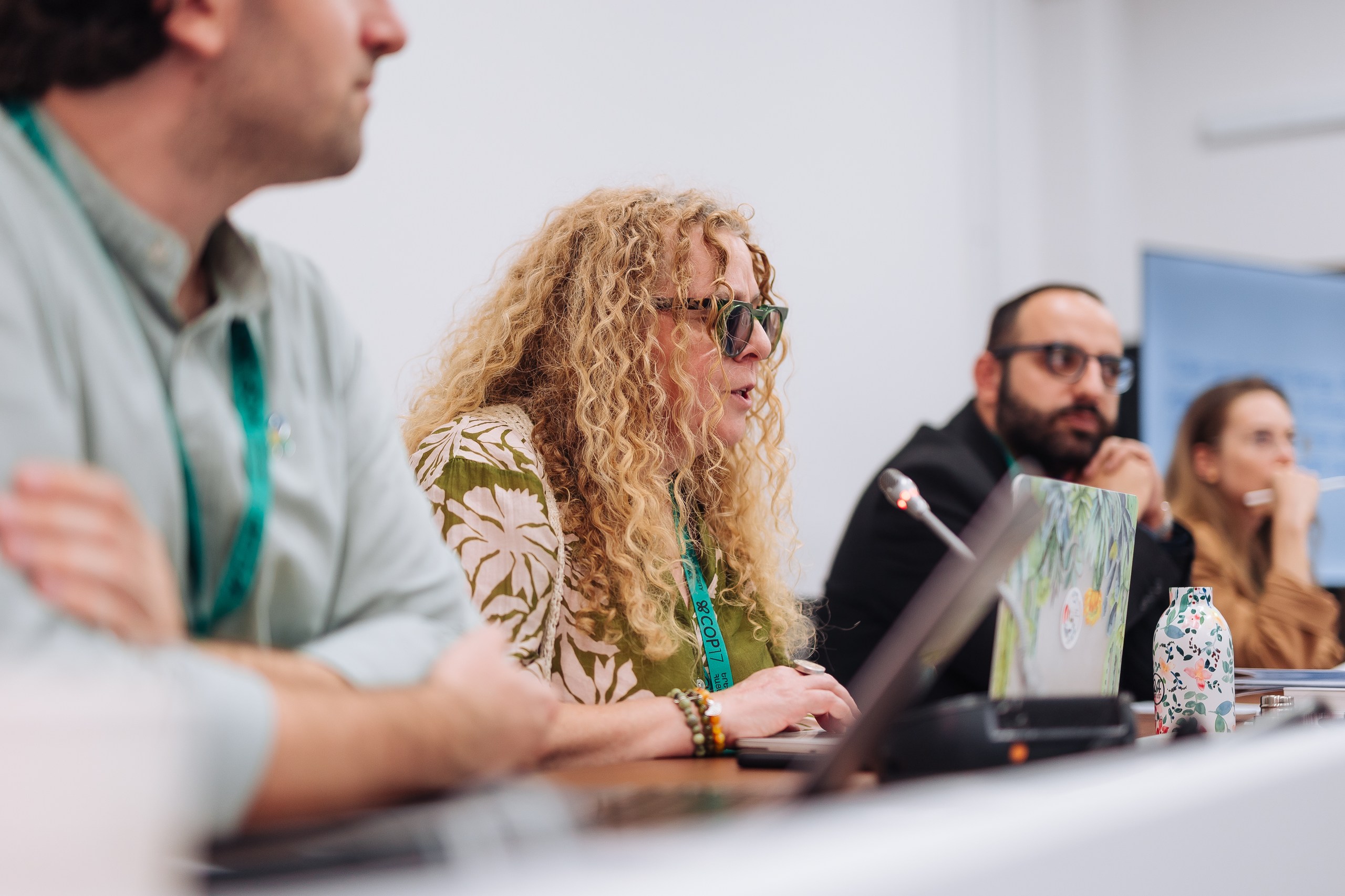
Continuing this alternative and decolonial reading of Yerevan, Arsen Abrahamyan turned to the city’s river network, particularly the Hrazdan and Getar rivers, questioning Yerevan’s seemingly water-rich image through a distinction between “controlled” and “living” waters. While piped, channelled, and regulated waters remain highly visible and are actively incorporated into the politics of shaping and representing urban space, living river systems are increasingly polluted and marginalised. Highlighting this contradiction, Abrahamyan discussed the importance of coexistence with uncontrolled waters, which is central not only to questions of the urban environment, but also to broader questions of democracy, decentralisation, and horizontality.
Bringing an oral-history perspective to the discussion, Hourig Attarian focused on different experiences and voices around water, as well as community practices and forms of knowledge. Drawing on in-depth interviews and oral histories collected with different communities across Yerevan, Attarian highlighted the differences between official narratives and public memories surrounding water bodies, demonstrating how oral history can reveal layers that cannot be understood through mapping, urban planning documents, or statistics alone.
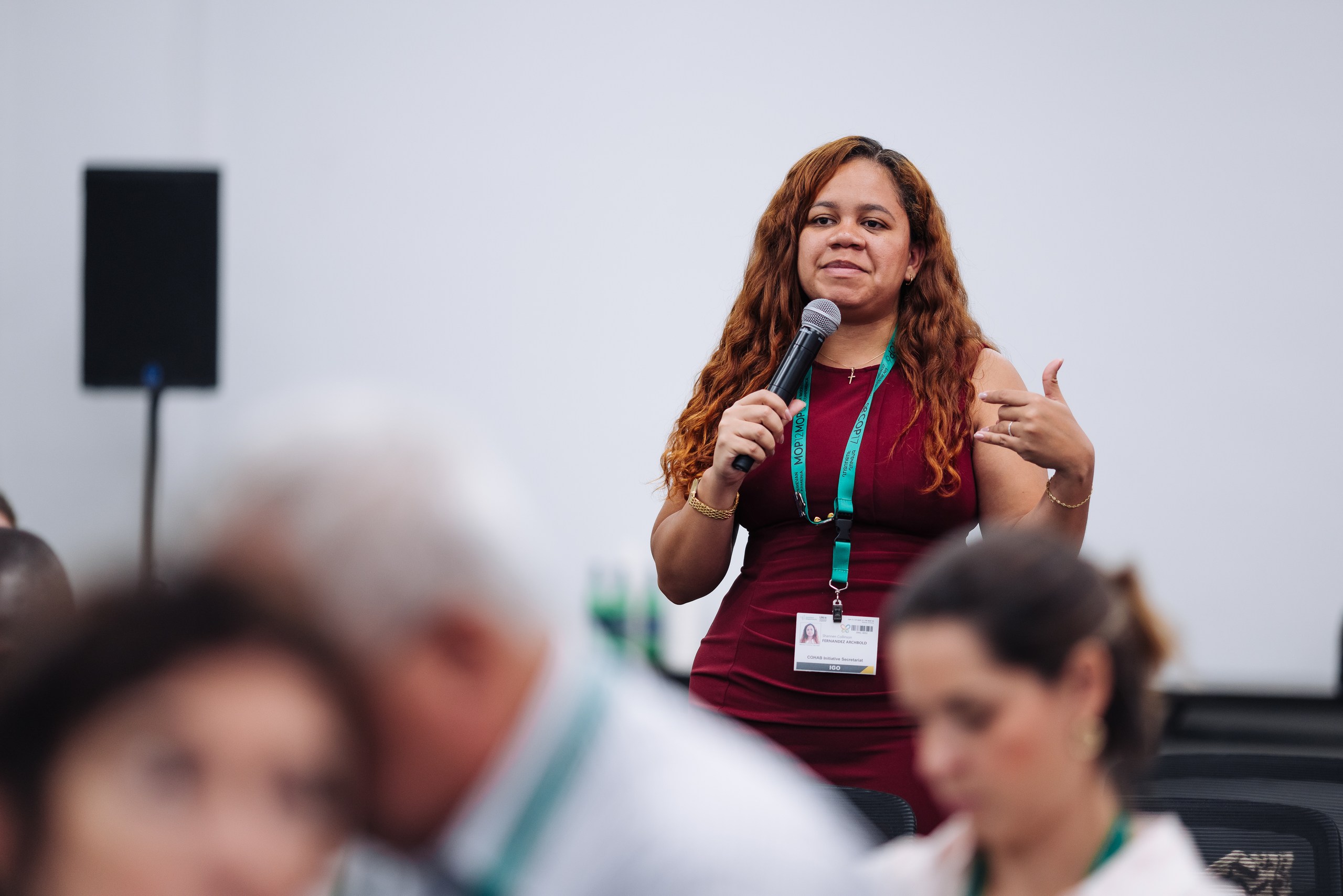
The presentations opened up a broader space for discussion with the audience. The project presentation became a space for reflecting on biodiversity, urban planning, memory, and the politics of water, further enriching CSN Lab’s work on environmental and spatial justice, as well as the rights of nature and the rights of water.
Through its research and cultural practice, CSN Lab aims to continue bringing these questions into local and international cultural discourse, academic debate, and platforms for policy dialogue, contributing to the recognition of the rights of nature and, in particular, the rights of water bodies, and to their understanding as interconnected living ecological systems whose integrity and continuity require protection.
The Blue Yerevan project was implemented through cooperation between the Cultural and Social Narratives Laboratory NGO and the Heinrich Böll Foundation South Caucasus Regional Office. The content of the project is the sole responsibility of the Cultural and Social Narratives Laboratory NGO and can in no way be taken to reflect the views of the Heinrich Böll Foundation South Caucasus Regional Office.
photo: Daniil Primak