
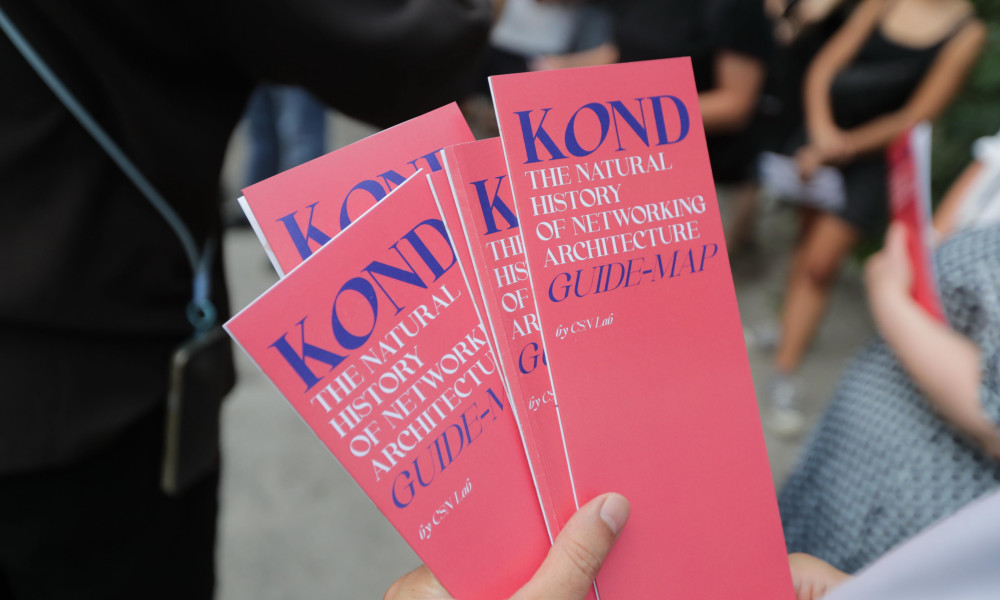
Kond is a place where several of CSN Lab’s research directions and methods intersect: working with communities, the democratisation of heritage, architectural and urban analysis, and social and cultural memory. Here, these approaches do not remain separate methodologies but intersect within the same urban environment. Kond: Urban Utopias, Living Futures grows precisely from this point of intersection.
At the end of summer, Kond became both the site and the method of this inquiry. Initiated by the Goethe-Institut and developed through a collaboration between CSN Lab, Tegh Degh, and artist Gohar Sargsyan, Kond: Urban Utopias, Living Futures brought together dozens of people to observe, listen to, and read Kond’s networking architecture. The programme brought research and artistic practices together, guiding visitors through architectural form and collective memory and opening conversations between what is inherited, what is lived, and what is still possible. Kond is read here not as a static fragment of Yerevan’s past, but as a living spatial and social network in which histories, environments, and possible futures remain intertwined.
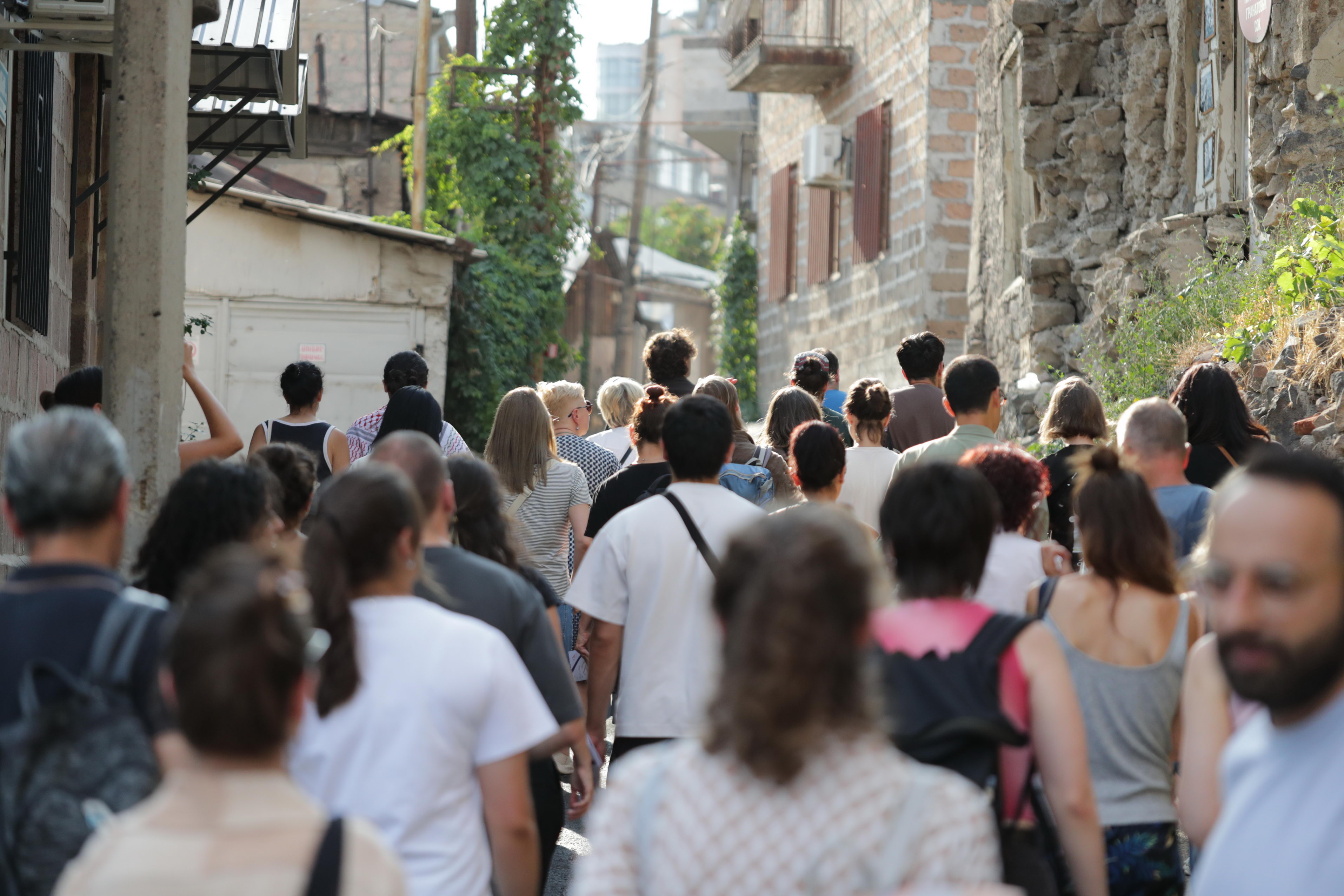
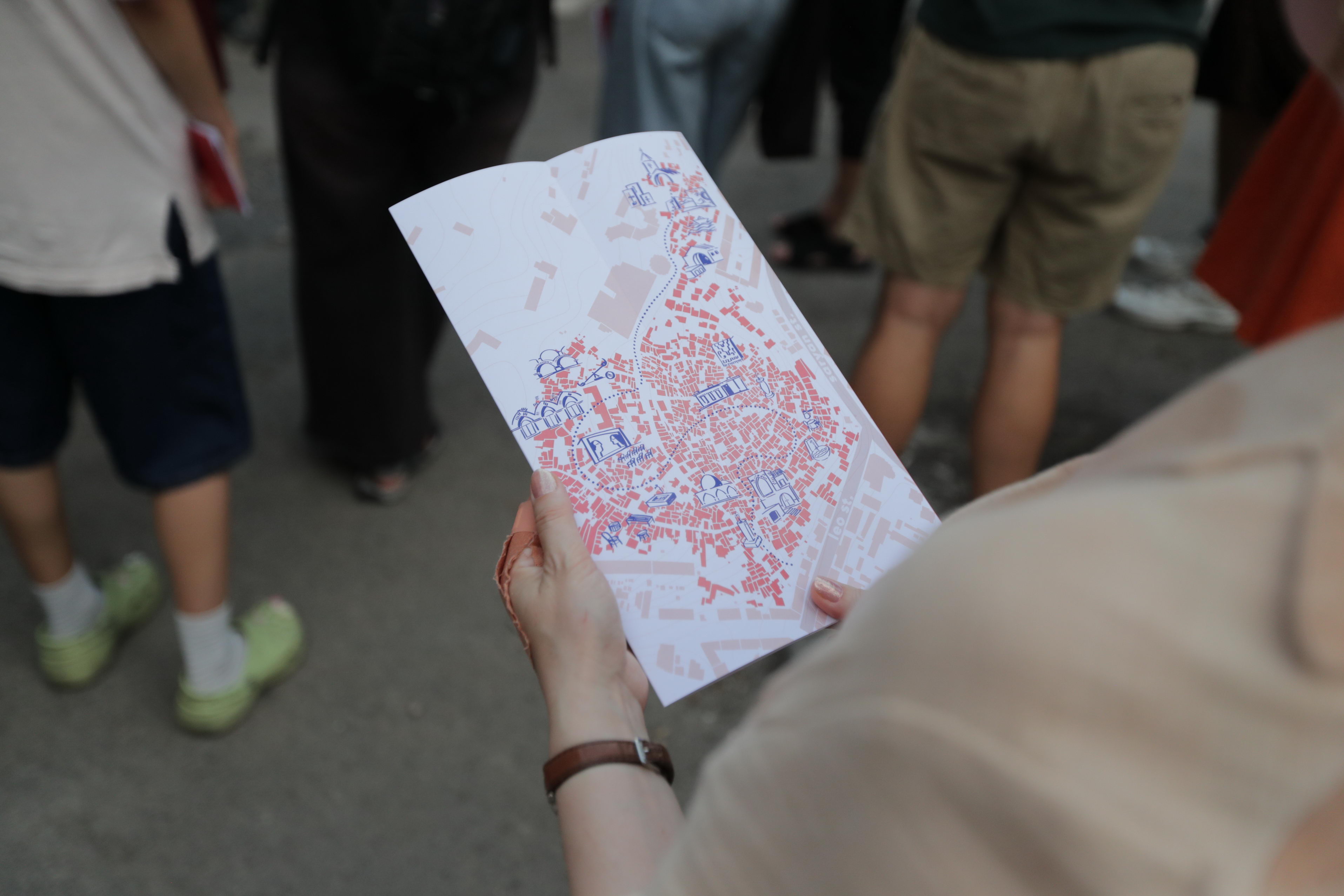
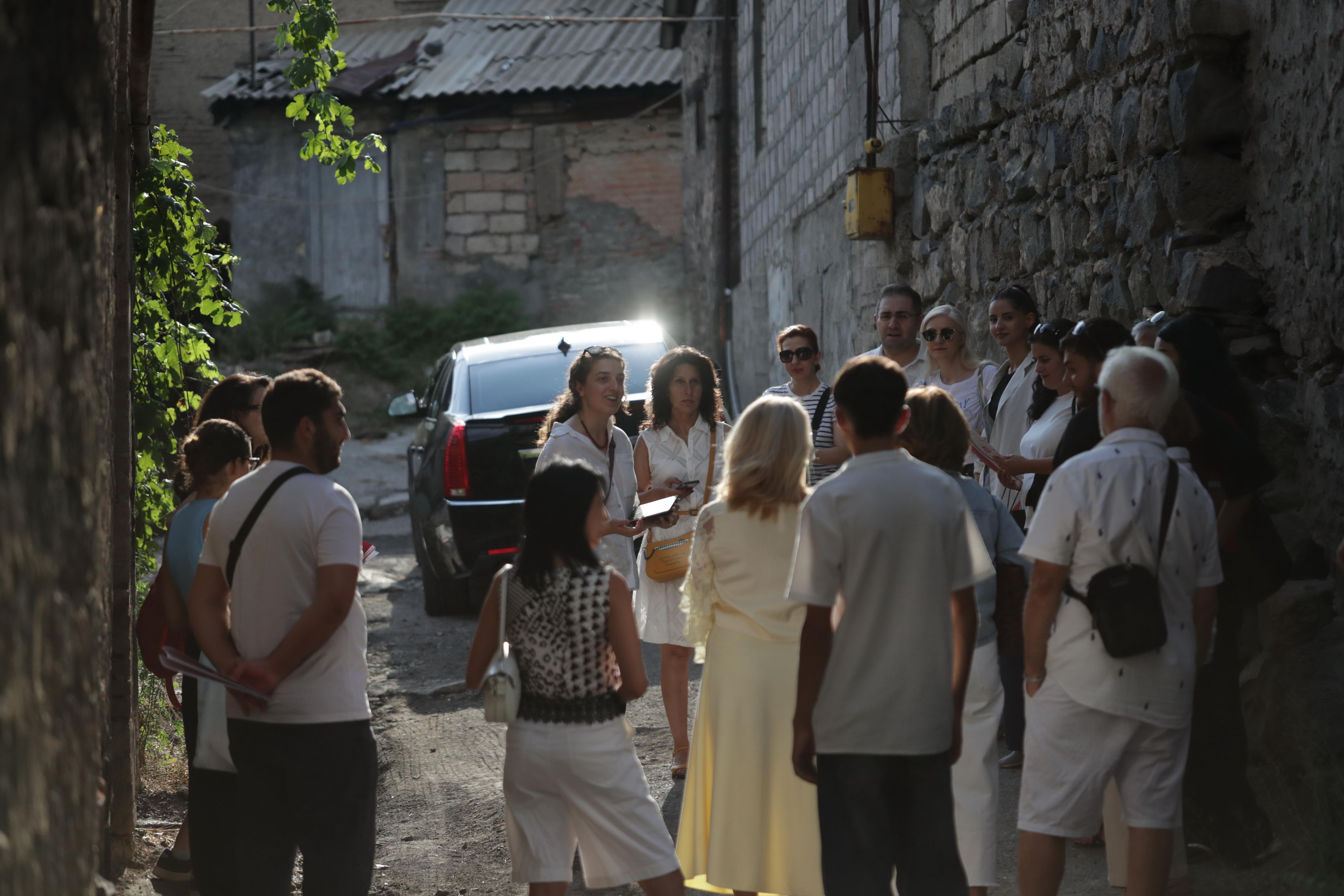
The Kond Memory Tour, which opened the programme and grew out of the research and collaboration between CSN Lab and architect and urbanist Elen Margaryan, became a first step towards reading the neighbourhood. Within the context of the programme, CSN Lab also initiated the creation of a digital map-guide that brings together a tour developed over many years. The route allowed participants to read Kond through its architecture and natural landscape, its houses and courtyards, winding paths and gardens, tracing the relationship between the built environment and the terrain. Walking becomes a method of spatial inquiry, making it possible to trace an urban structure that has taken shape through intimacy and everyday life, not through the logic of an imposed urban grid.
The Memory Tour also unsettles long-established ways of looking at Kond. Its winding streets, dense construction, and refusal to conform to a conventional urban grid have long been translated into a vocabulary of deficiency: “unplanned”, “unfinished”, “incomplete”, as though awaiting correction. CSN Lab’s ongoing research project, Kond: The Natural History of Networking Architecture, proposes another point of departure, asking: what becomes visible when irregularity is read not as failure, but as knowledge? Houses negotiate with the hill, paths follow the terrain, gardens simultaneously interrupt and connect the built environment, while architecture takes shape through proximity, necessity, and everyday life. What may appear chaotic from above begins to reveal its own logic from within: a network shaped through adaptation and interconnectedness.
If walking allows the neighbourhood to be read, making allows it to be touched. Created in one of the neighbourhood’s houses through a collaboration between artist Gohar Sargsyan and local residents, the Collective Textile Installation became a space for working with memory through sewing, embroidery, colour, and experimental textile practices. Here, the neighbourhood becomes a textile object, passing through hands, materials, and gestures. Memory acquires texture; collective experience takes material form. Heritage becomes something that can also be made together.
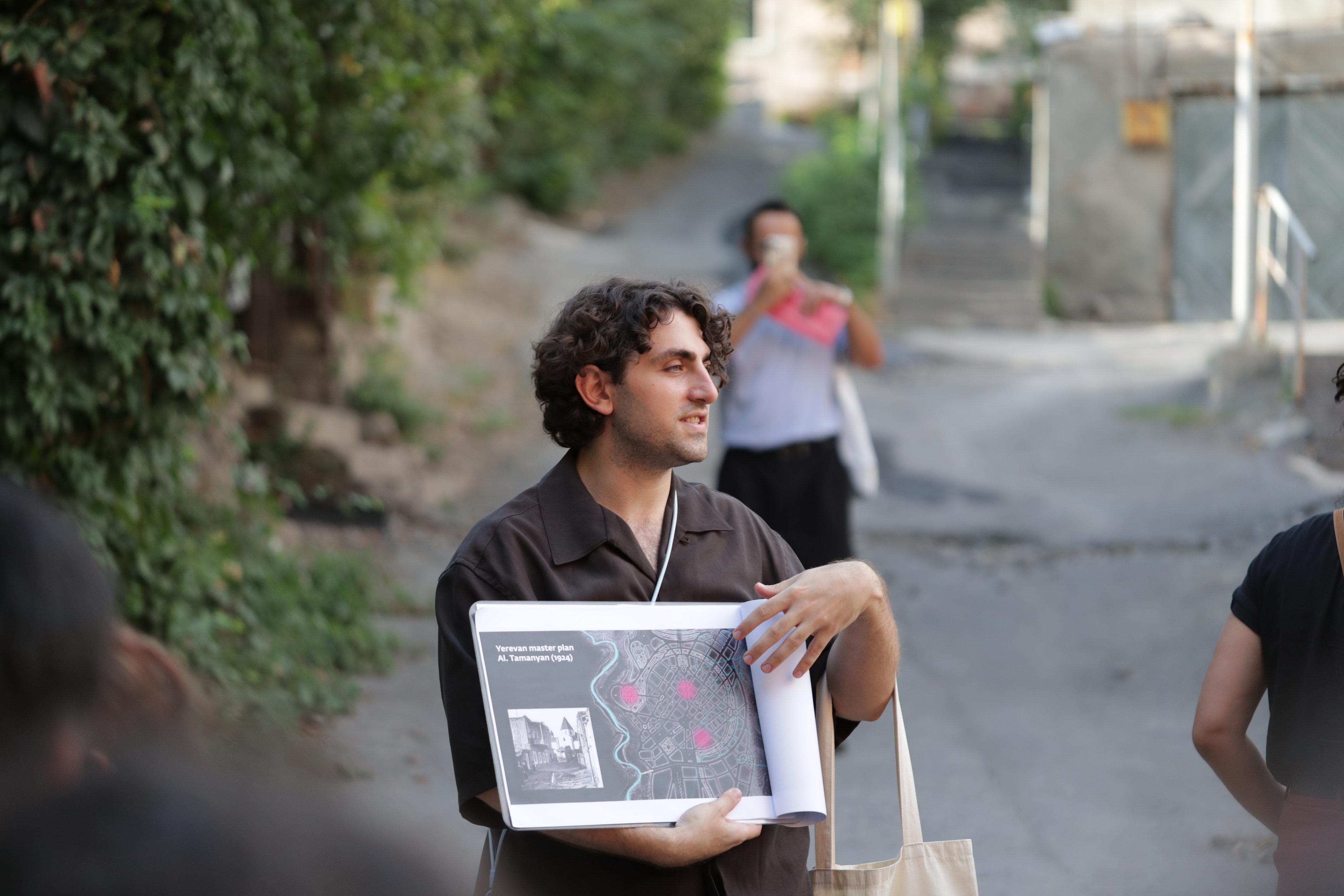
Another opportunity to read the fabric of the neighbourhood came through the public conversation that followed the tour and took place at Hyusyan’s House Museum, turning the house itself into both the setting and a participant in the discussion. Here, in the talk Kond: The Natural History of Networking Architecture, Tigran Amiryan and Arsen Abrahamyan presented the results of their long-term research. Reading the neighbourhood not only through the lens of history or heritage, the speakers emphasised Kond’s distinctive natural and urban ecology—in other words, the dialogue between natural and human-made environments within the neighbourhood.
Kond does not simply occupy the hill. It negotiates with it. Paths bend with the terrain instead of cutting through it, houses adapt to the slope, while gardens and green spaces become meeting points around which smaller social worlds take shape. These networks exist within other networks, connecting families, neighbours, paths, and shared spaces. Read this way, Kond is simultaneously an architectural, ecological, and social structure. Its spatial form holds a history not only of building, but also of adapting to the landscape, sharing, and creating community within it.
And yet, Kond has rarely been given the opportunity to be read on its own terms. Its complexity has repeatedly been exoticised, romanticised, or translated into narratives of deficiency. Different visions of urban transformation have regarded it as a territory awaiting correction, reorganisation, or replacement. A view from within poses another question: what if what appears incomplete from the outside contains forms of spatial knowledge that become legible only through living there? Memories passed down through generations and relationships between neighbours, houses, and gardens produce their own knowledge of the city, even when conventional languages of urban planning fail to recognise it.
Literature, however, suggests what urban planning forgets. Turning to Eduard Avagyan’s We Live in Kond, written in the 1960s and deeply rooted in the neighbourhood of his childhood, Tigran Amiryan presented an image of Kond from within, composed of courtyards and neighbours, streets and gardens, encounters and small rituals of everyday coexistence. These are elements of urban life that rarely survive in official histories of the city. Read decades later and from within the neighbourhood itself, the literary text becomes an archive of its own: it preserves not only what Kond was like, but also what it meant to live there.
The talk also included excerpts from Harutyun Khachatryan’s documentary Kond (1987), which captures the neighbourhood’s everyday rhythms, movements, and spaces within another temporal frame. Encountering these images again in Kond decades later, we no longer see merely a documentation of what once was. They unsettle the boundary between archive and present. A street survives but has changed; a movement suddenly feels familiar; one way of inhabiting space disappears while another persists. The moving image makes time visible within the neighbourhood and poses a question that architectural documentation alone can never fully answer: how does a place live?
These different possibilities of reading Kond make it clear that its future can no longer be limited to the familiar opposition between preservation and redevelopment. Kond demands another vocabulary. What can its architecture teach us about adapting to terrain? What do its gardens tell us about nature and social relations? What knowledge do its internal networks contain?
And not all knowledge is born from research, books, or public conversation. Sometimes knowledge is born around a table, in play, in music, or in a film watched together. In the courtyard of Hyusyan’s House, Tegh Degh gave the programme another rhythm, bringing people together through courtyard games, a concert, a film screening, and the experience of simply being together. Gathering around a table for khorovats became part of this coexistence, while the courtyard gradually turned into an open-air cinema, where Dmitri Kesayants’s Avdo’s Car (1966) brought old Yerevan back to the screen from within one of the city’s oldest neighbourhoods. A film about a city negotiating change encountered a courtyard that had itself lived through transformations.
This is how the different layers of Kond: Urban Utopias, Living Futures come together and condense: a memory tour born from research, the remains of a mosque, architecture read through terrain, memory sewn into textile, a novel becoming an urban archive, documentary images returning to the place they once recorded, food shared around a table, cinema projected in the courtyard of a house.
Kond appears not as a surviving fragment of “old Yerevan”, but as a neighbourhood where architecture, landscape, memory, nature, and forms of living together continue to co-create one another, revealing a capacity for community-making that has been lost within the Soviet and post-Soviet urban fabric of the city.
“Kond: The Natural History of Networking Architecture” was developed within the Goethe-Institut and ARCH+ programme “Ecological Futures”.
Photos by Ed Tadevossian