
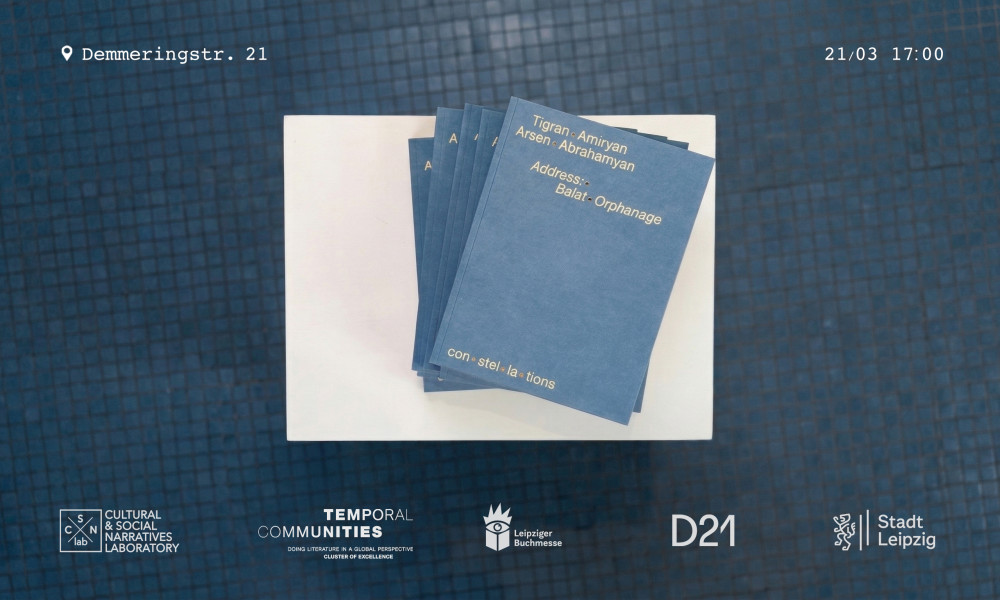
How can local histories be woven from the shadow of monumental history?
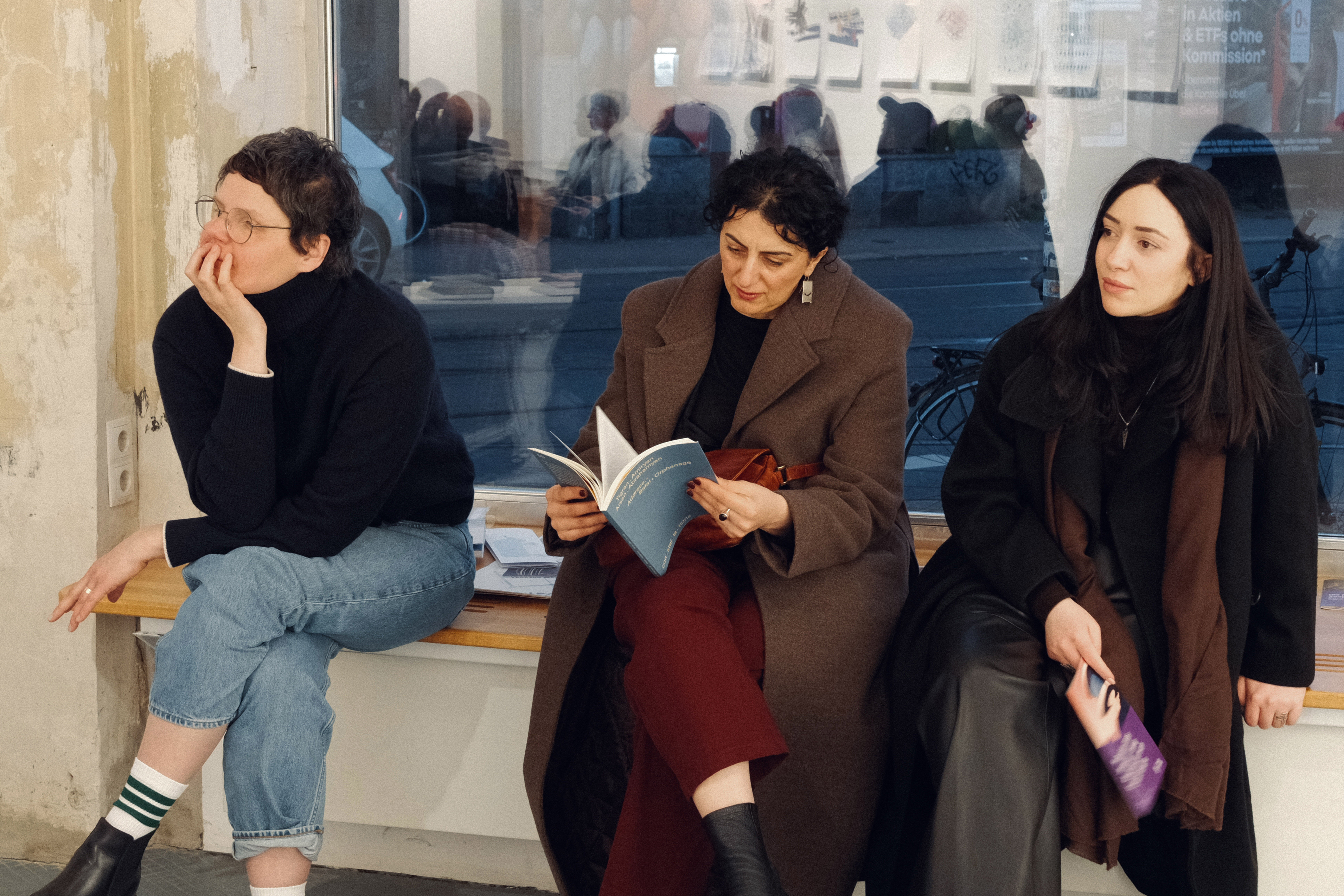
This question shaped the presentation and discussion around CSN Lab's new publication Address: Balat Orphanage, which took place on 21 March at D21 Kunstraum Leipzig as part of the Leipzig International Book Fair.
“This essay was written in three cities: Istanbul, Yerevan, and Berlin;”
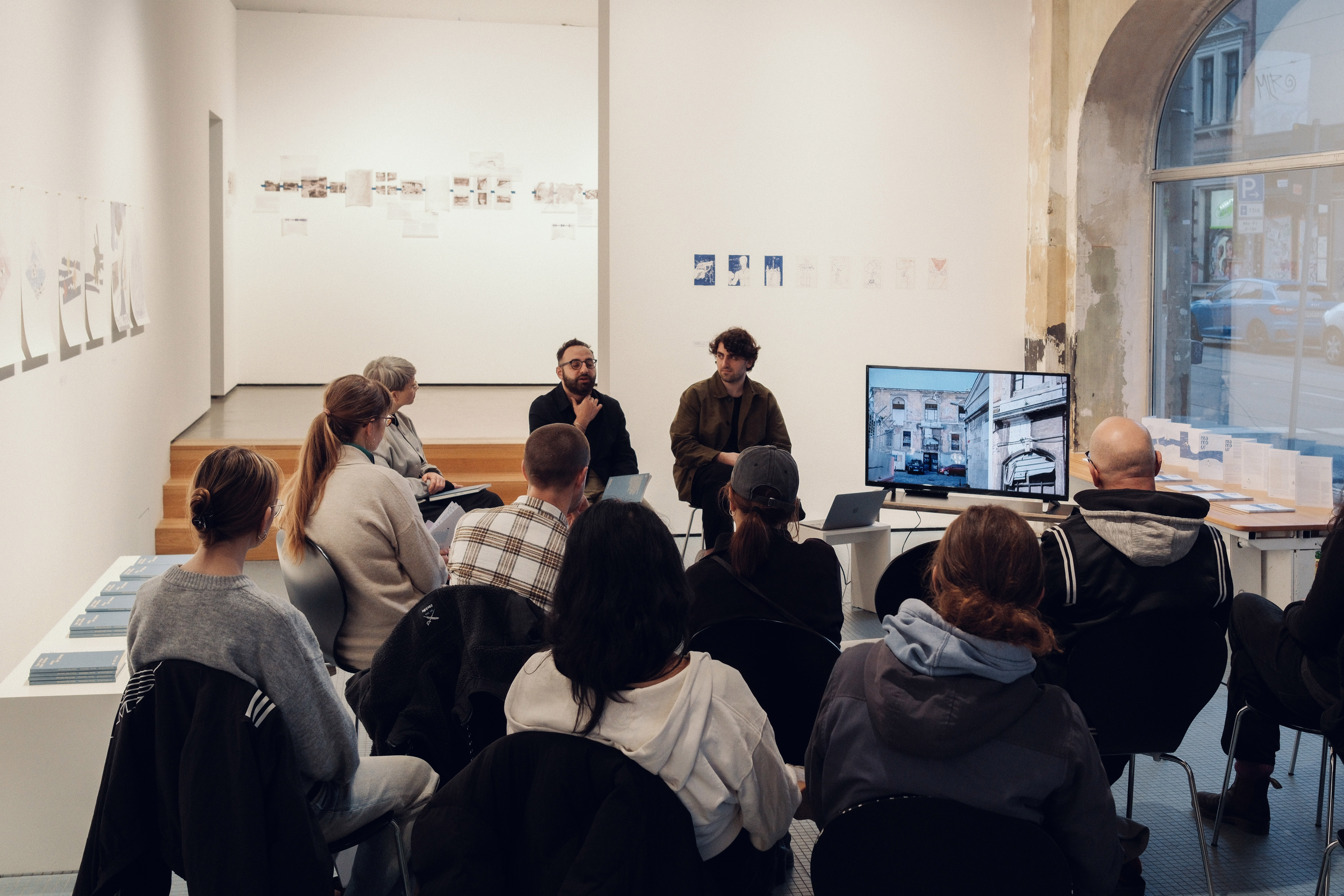
this opening line of the book shares the project’s translocal and collaborative framework, bringing together research, archival work, and dialogue across geographies, languages and cultures. The book presentation featured a conversation with the authors, Tigran Amiryan and Arsen Abrahamyan from CSN Lab, moderated by co-editor Barbara Bausch from Cluster of Excellence Temporal Communities at Freie Universität Berlin. Together, they shared the project's trajectory, from long-term research and archival work to its final publication, while opening broader reflections on memory, migration, and spatial narratives.
Emerging from CSN Lab's interdisciplinary research on Istanbul's Balat district, the book is grounded in the archives of the Khorenyan School, one of the Armenian schools in Istanbul, which was transformed into an orphanage during the Armenian genocide in response to the critical situation of the community. Through this material, the authors trace nearly two centuries of transformation, revealing layered histories of care, community, and rupture across the late Ottoman Empire and the early Republic of Turkey.
In their presentation, the authors reflected in more detail on their fieldwork in Balat, developed in close cooperation with the Balat Foundation and the Hrant Dink Foundation, which digitised and categorised the archives and made them accessible for research. They spoke about the careful work with the Khorenyan materials, the challenges of engaging with multilingual and fragmented sources, and the complexity of addressing histories shaped by trauma within ongoing political tensions. Particular emphasis was placed on the responsibility of reading and sharing such archives, balancing analytical depth with sensitivity. Address: Balat Orphanage seeks to decentralise dominant narratives around the Armenian Genocide and create space for multiple perspectives, making visible the diverse experiences of Armenian communities both within and beyond Turkey while also connecting these reflections to present-day debates on peace and dialogue.
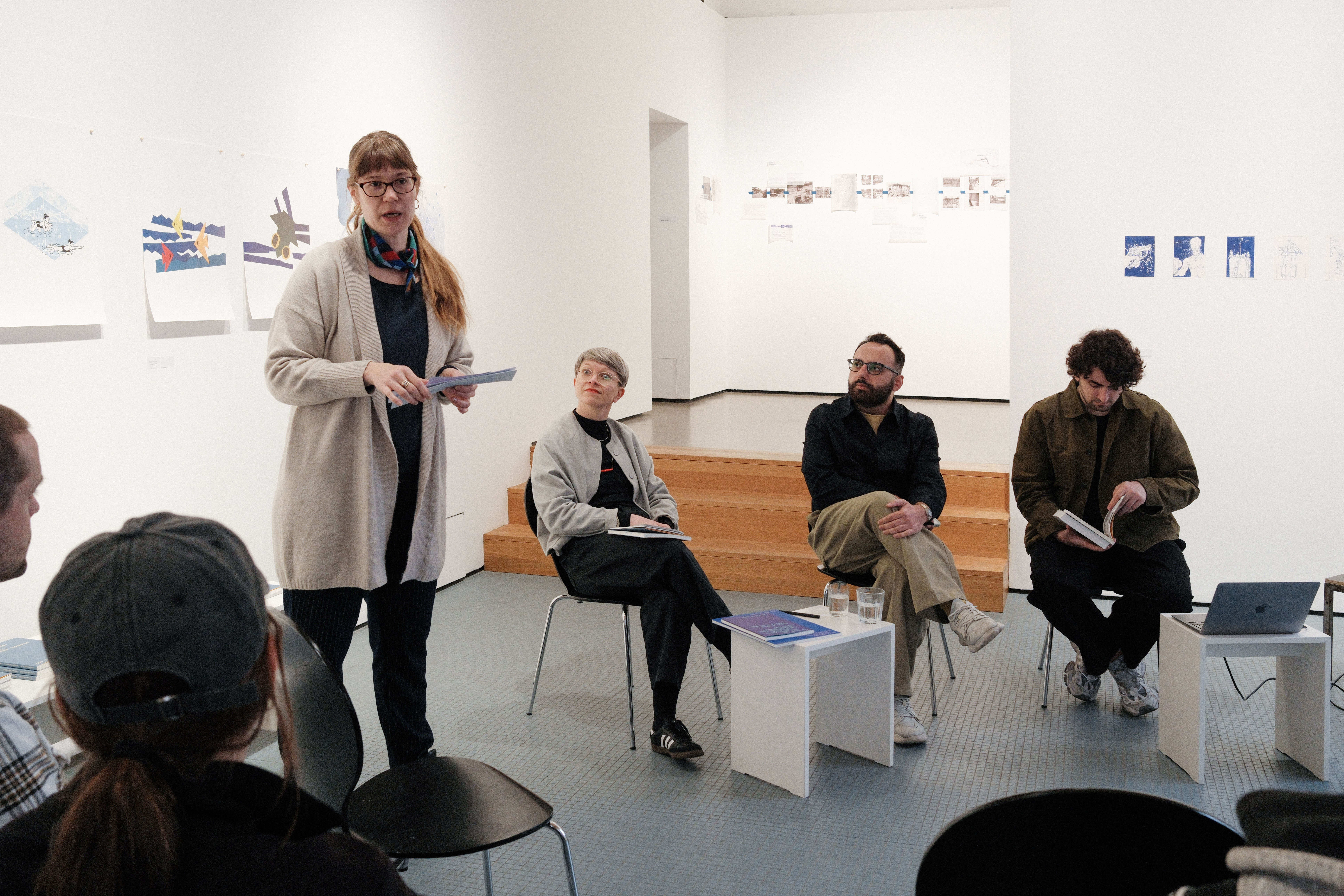
In her remarks, Barbara Bausch reflected on the editorial process and the importance of language when working with sensitive historical material. She highlighted the need to create space for interpretation while carefully framing the narratives emerging from the archive. The presentation was followed by an open discussion with the audience, which addressed the challenges of engaging with difficult histories and the question of how such work can be carried out responsibly, bringing forward the complex and often untold past.
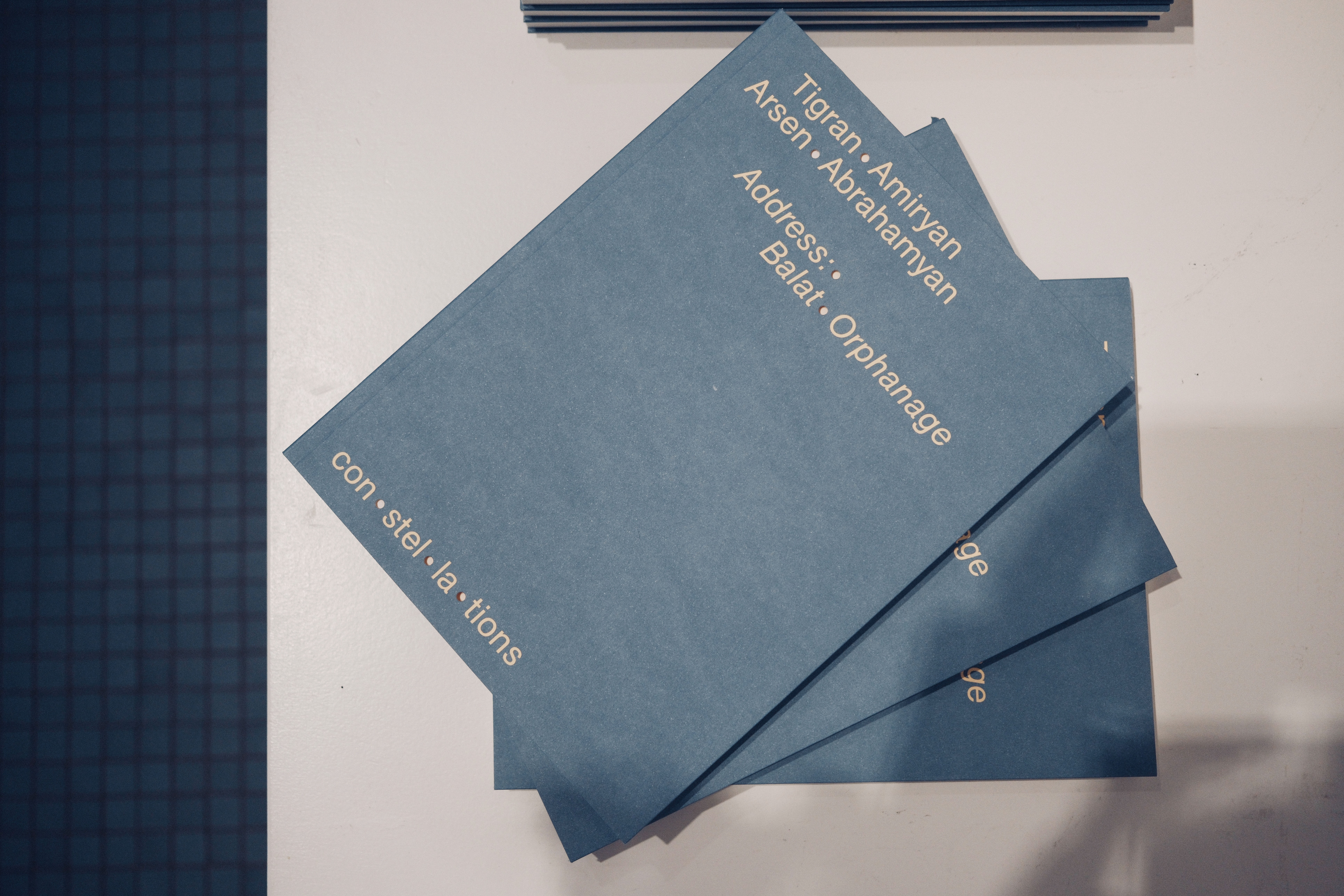
The "Address: Balat Orphanage" book is available online in open-access format and can also be purchased in print through major platforms. The publication is part of the con·stel·la·tions series, a project of the eponymous hub for networked and transdisciplinary initiatives conceived within the framework of the Cluster of Excellence 2020 Temporal Communities: Doing Literature in a Global Perspective at Freie Universität Berlin.