
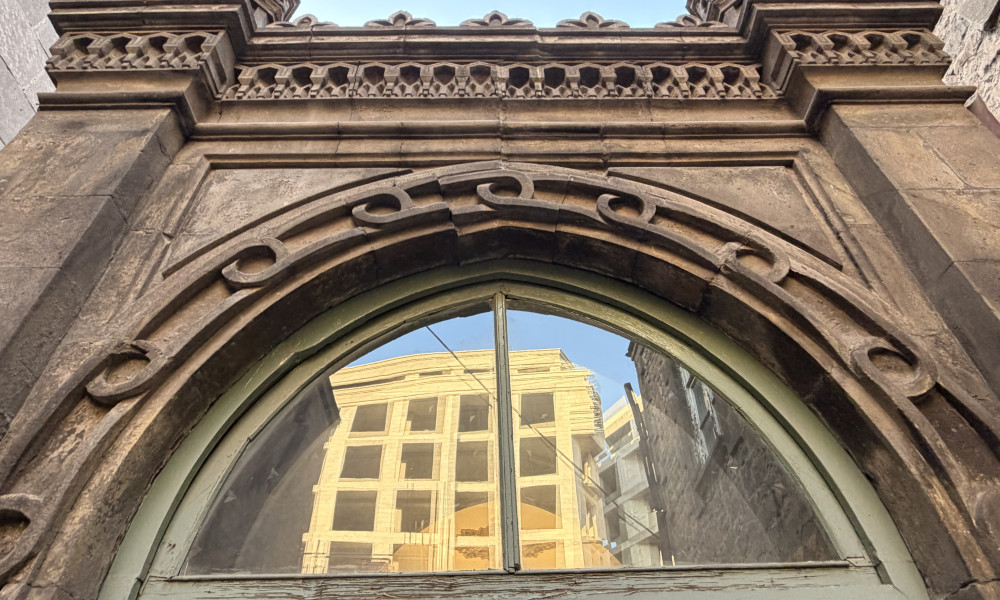
At the edge of the former Firdus district, a surviving historic building becomes a place from which to think about what remains of a neighbourhood when the neighbourhood itself is gone. Returning to Firdus means returning not only to its architecture, but also to the relations, practices and cultures of care through which a place becomes inhabitable, and asking how these can persist in the memory of an ever-changing city.
The old building at 32 Hanrapetutyan Street looks out onto the construction dust rising before it. Once home to the Persian Consulate and now entering another life as a cultural space, the building has itself survived successive transformations of the city. Around it, construction continues to redraw the space where Firdus once stood. In the glass, the same scene returns as a reflection: for a moment, memory and disappearance meet on the surface of the building that remains.
It is from this threshold that Firdus can be approached again.
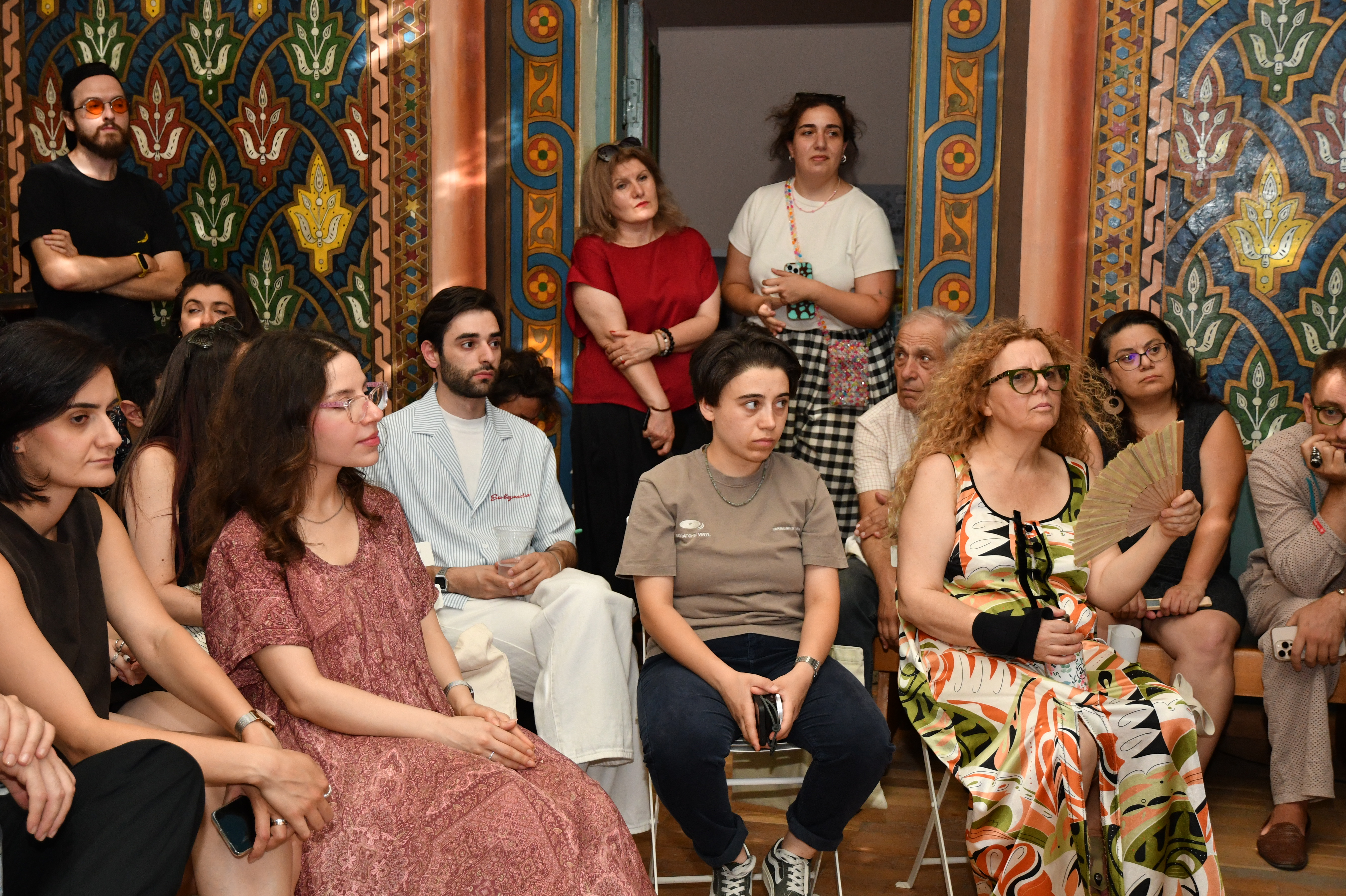
A public lecture by Tigran Amiryan, organised by CSN Lab, Epigraph and Rambalkoshe, opens a conversation about the architectural and urban transformations of the district, but also about the forms of life that once shaped its everyday existence. The location itself makes these questions inseparable from the space in which they are being asked.
Firdus cannot be read through architecture alone. Its memory is dispersed across courtyards, pools, workshops, a kindergarten, streets and homes, but also through the relations that connected these spaces to one another. Everyday encounters, work and play, hospitality and mutual support brought together people of different cultural and social backgrounds. The neighbourhood was therefore produced not only through walls, streets and buildings, but through practices of living together.
This is where care/scape/s offers another way of reading urban space. A city is shaped not only through planning, construction and architectural form. It is also continuously made through networks of care: through gestures of hospitality, neighbourly relations, coexistence, shared routines and forms of mutual support. These relations, in turn, create a form of spatial knowledge carried by bodies, habits, memories and repeated encounters.
When a neighbourhood disappears or is radically transformed, what is lost cannot therefore be measured only in square metres or demolished structures. The disappearance of a courtyard may also mean the disappearance of the relations it enabled; the loss of a familiar route may interrupt a geography of encounters; the demolition of a house can unsettle networks of memory extending far beyond its walls. Material and intangible heritage do not occupy separate worlds.
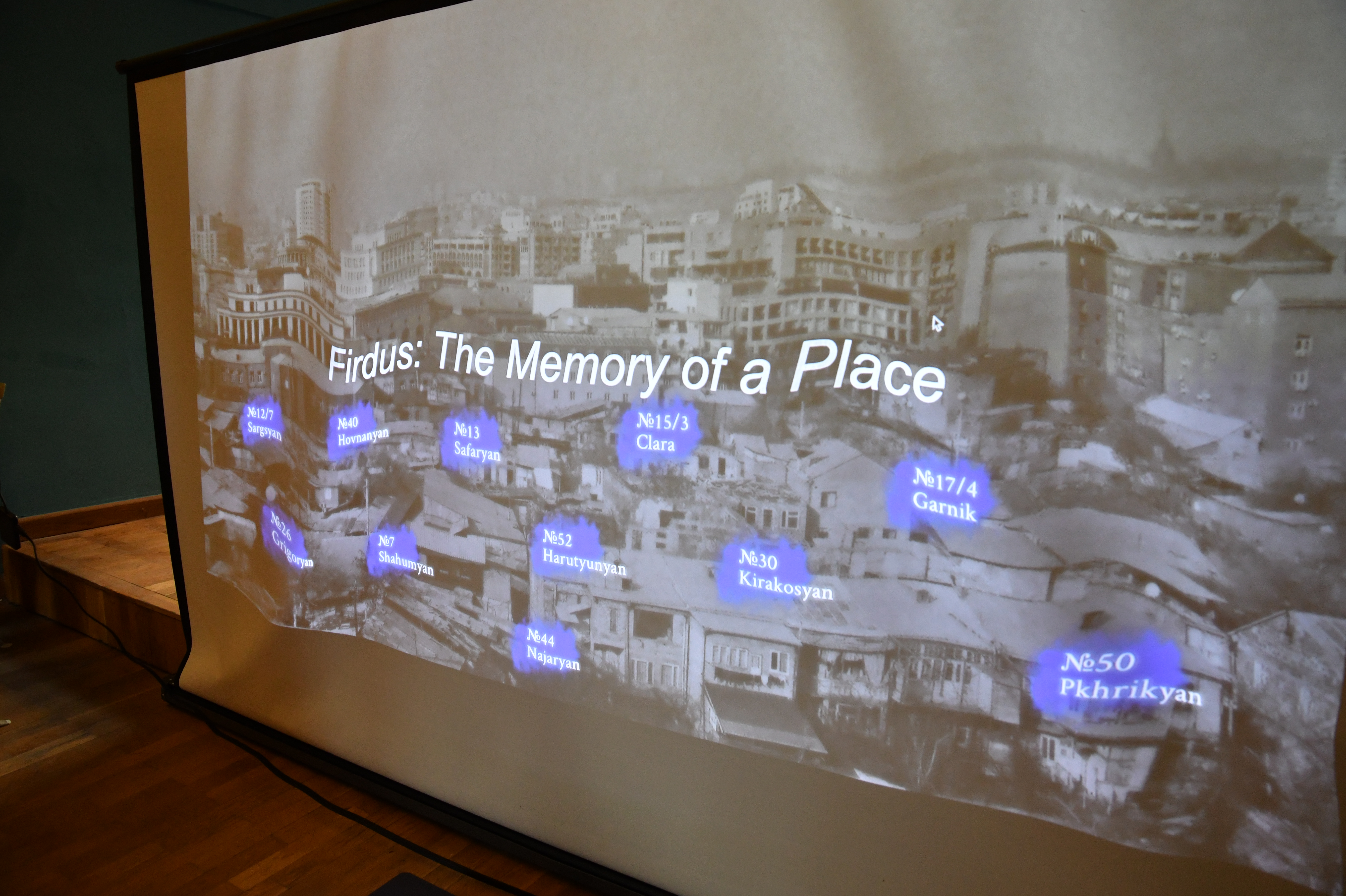
Firdus: The Memory of a Place, one of CSN Lab’s long-term research projects, approaches the neighbourhood through precisely this entanglement: peaceful coexistence, urban memory, and the preservation of tangible and intangible cultural heritage. Returning to Firdus also means returning to the different forms through which a place can continue to be known—through stories and testimonies, photographs and maps, architectural traces and everyday objects, but also through memories of relations and practices once embedded in its spaces.
Preservation, from this perspective, is not a finished condition. Nor does it begin only when a building acquires protected status or an object enters a museum. It can take the form of documenting, listening, narrating and bringing fragments of a place into relation again. A public conversation can become part of this process too: not by restoring what has disappeared, but by keeping open the possibility of reading what its disappearance means.
There is something particularly resonant, then, in speaking about Firdus from a building that has remained standing. Its walls hold the traces of one city while its windows look onto another being made around them. In the glass, preservation and disappearance briefly come face to face.
The memory of Firdus remains between what has disappeared and what has been preserved—in stories, spatial knowledge and cultures of care. It continues to inhabit the city, reminding us that preserving a place is never only about buildings and spaces. And from within this absence, Firdus continues to ask: what remains of a place when the place itself is gone?