
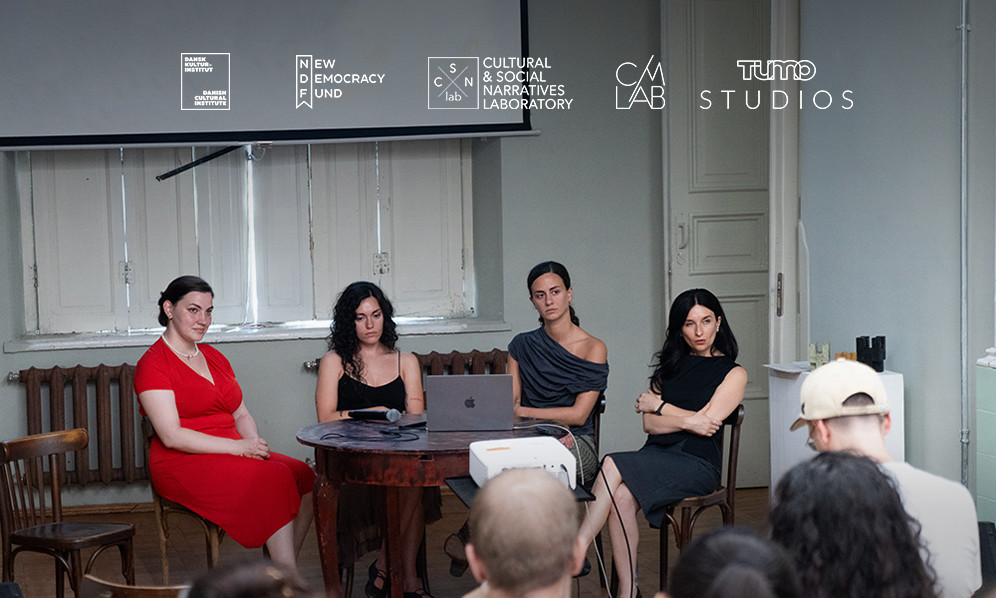
Re-Lentus 2026, the annual Armenian-Georgian cultural dialogue programme, brought together architects, designers, and cultural practitioners to reflect on how spaces are shaped, built, preserved, and continuously reimagined. Organised by the Cultural and Social Narratives Laboratory (CSN Lab, Armenia) in collaboration with CuMa Lab (Georgia), this year's programme explored the many ways in which architecture and design extend beyond construction, becoming practices that shape communities, preserve cultural memory, and strengthen democratic societies.
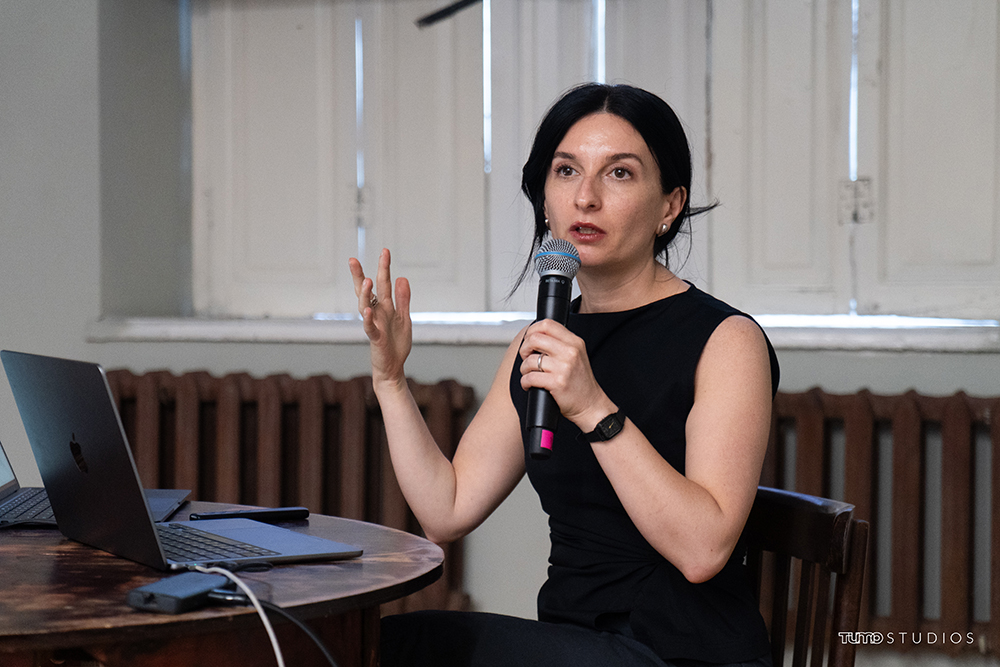
Now in its fifth year, Re-Lentus continues to increase the visibility of women cultural practitioners while fostering long-term Armenian-Georgian dialogue and collaboration. Responding to the social and political realities of the region, each edition explores a new theme through the experiences of women artists, researchers, and cultural professionals whose work addresses the pressing challenges of our time.
Held at TUMO Studios in Yerevan, this year's public event brought together architects, designers, artists, researchers, students, and cultural practitioners. By approaching design not simply as an aesthetic activity but as a social and cultural process, the programme's three presentations demonstrated how contemporary spatial practices intersect with questions of cultural heritage, sustainable development, community participation, memory, and democracy.
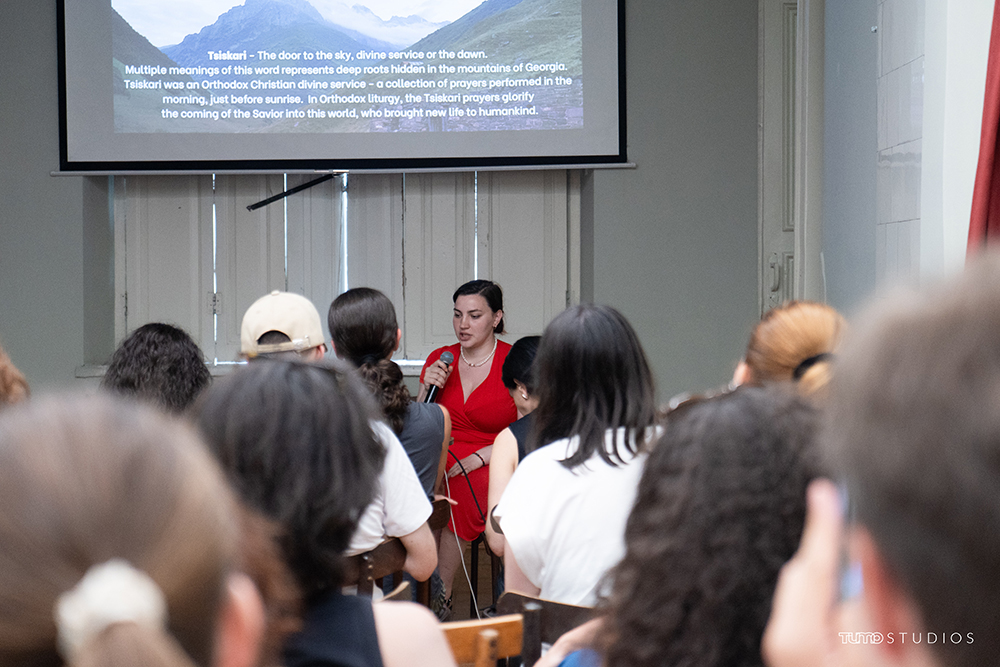
The event opened with architect Nana Zaalishvili, founder of Idaaf Architects, and her talk Alizi: A Manifesto for Circular Construction. Drawing on years of research into alizi, traditional unfired adobe brick, she offered a critical perspective on contemporary construction practices driven by speed, efficiency, and commercial profit. Through documentary material and examples from Idaaf Architects' research, Zaalishvili demonstrated how local materials and traditional building knowledge can provide environmentally sustainable alternatives.
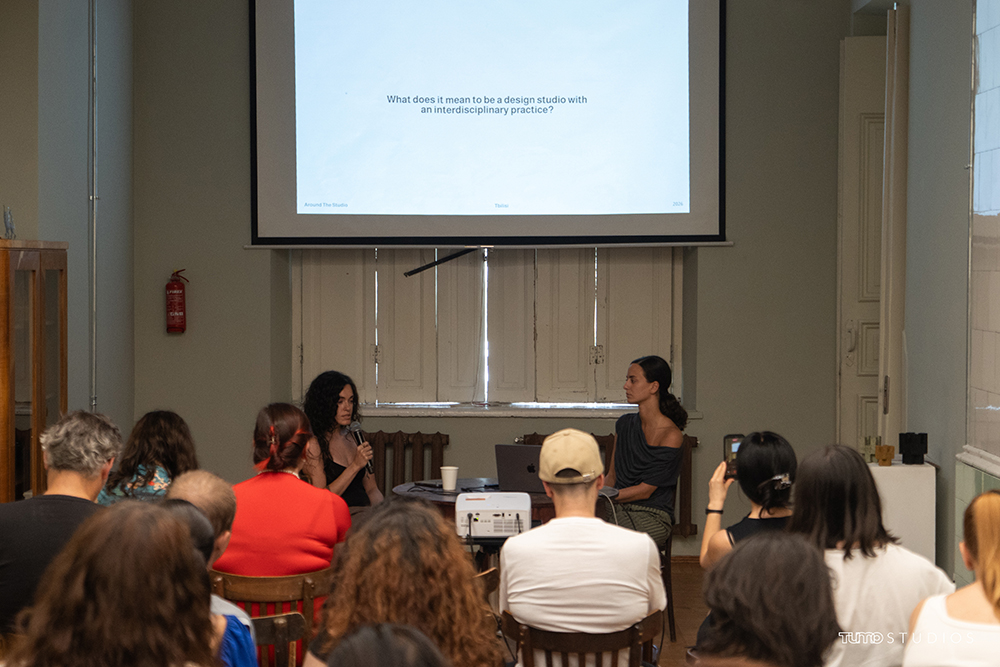
The founders of the interdisciplinary design studio Around the Studio, Tika Shelia and Ano Jishkariani, presented the story behind the creation of their independent practice, reflecting on how architecture, design, and artistic practice inevitably respond to social and political change. Through examples from their collaborative projects, they demonstrated how independent design can become a platform for experimentation, critical thinking, and public engagement.
The programme concluded with architect, researcher, and volunteer at the National Trust of Georgia Irine Lomadze, whose presentation, Tsiskarebi: The Invisible Chain that Binds Us to Each Other and the Place We Build, focused on the restoration of the Tsiskarauli Tower, a project awarded the Europa Nostra Grand Prix. Reflecting on this initiative, Lomadze spoke about the importance of community participation in safeguarding cultural heritage, demonstrating how restoration can become not only a means of preserving historic structures but also of bringing communities together and strengthening them.
The Q&A session that followed also created an opportunity to discuss many shared challenges facing Armenia and Georgia, ranging from heritage preservation and the responsibilities of architects to sustainable construction and the role of design in democratic societies. Audience questions expanded the discussion beyond the individual projects, inviting participants to rethink the changing role of architects and designers today, not only as professionals responding to commissions, but also as cultural actors who shape public discourse, advocate for communities, and imagine more equitable futures.
Although each presentation approached the theme from a different perspective, focusing on sustainable materials, interdisciplinary design, or cultural heritage preservation, they collectively demonstrated that spaces are continuously shaped by political realities, local knowledge, collective memory, environmental responsibility, and the communities that inhabit them.
As in previous years, Re-Lentus once again served not only as a platform for sharing professional experience but also as an opportunity to build lasting regional collaborations. By bringing together architects, designers, and researchers from Georgia with audiences in Armenia, the programme once again underscored the importance of cross-border cultural dialogue at a time when democratic values, cultural rights, and collaborative practices remain essential across the region.
Re-Lentus is an annual cultural and interdisciplinary initiative implemented by CSN Lab (Armenia) and CuMa Lab (Georgia) with the support of the Danish Cultural Institute through the New Democracy Fund programme.