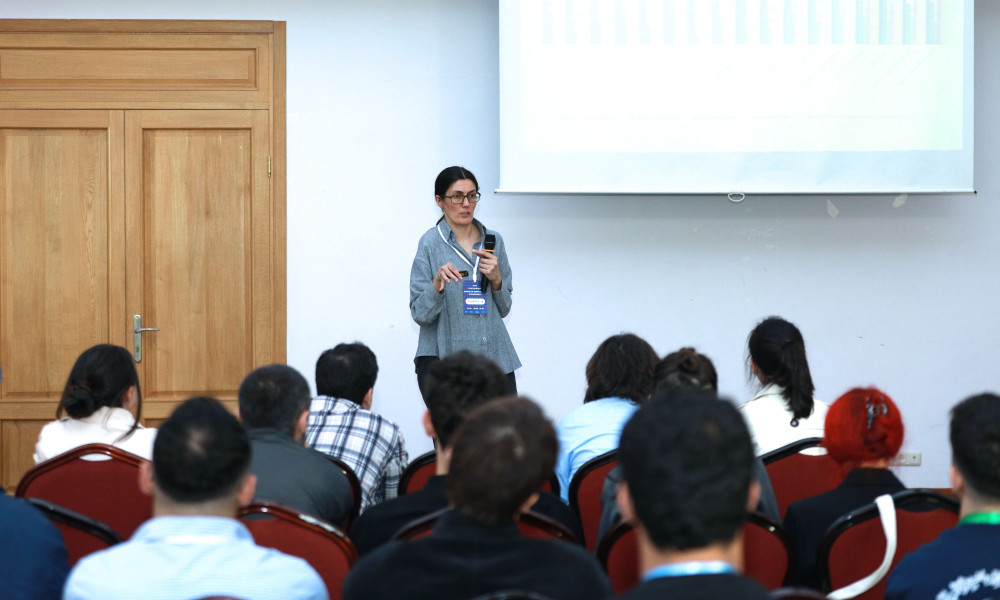
How do elections shape not only political outcomes but also the ways we think, perceive, and make choices? What lies behind the act of voting, and how are our decisions constructed, influenced and negotiated?
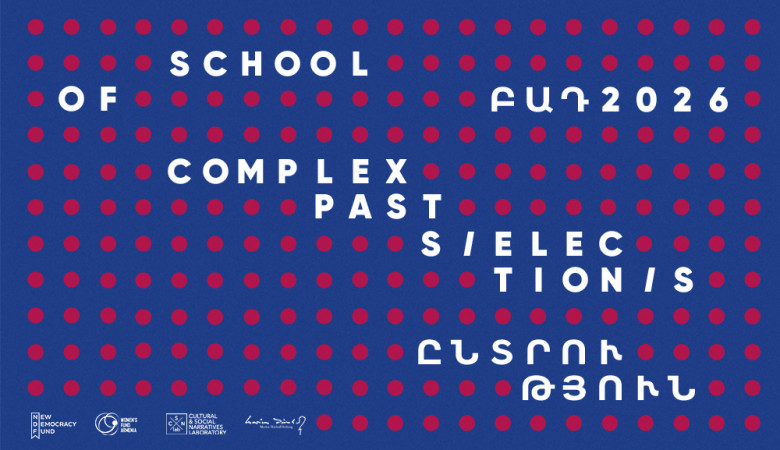
These questions framed CSN Lab’s annual alternative education program, the School of Complex Past 2026.
Under the title s/election/s, this year’s program focused on the upcoming electoral processes in Armenia, approaching elections not as isolated political events, but as complex social and cultural phenomena. Responding to the current geopolitical context, the growing climate of polarization, and the urgency of democratic engagement, the school examined elections as spaces where power, narratives, and meanings are continuously constructed, contested, and negotiated.
Positioned at the intersection of cultural research, critical theory, and alternative education, CSN Lab continues to explore how culture functions as a site for understanding and rethinking political processes. School of Complex Past 2026 brought together interdisciplinary perspectives to unpack the multilayered dynamics of elections, from historical transformations and philosophical reflections to media environments, discourse, and social inequalities.
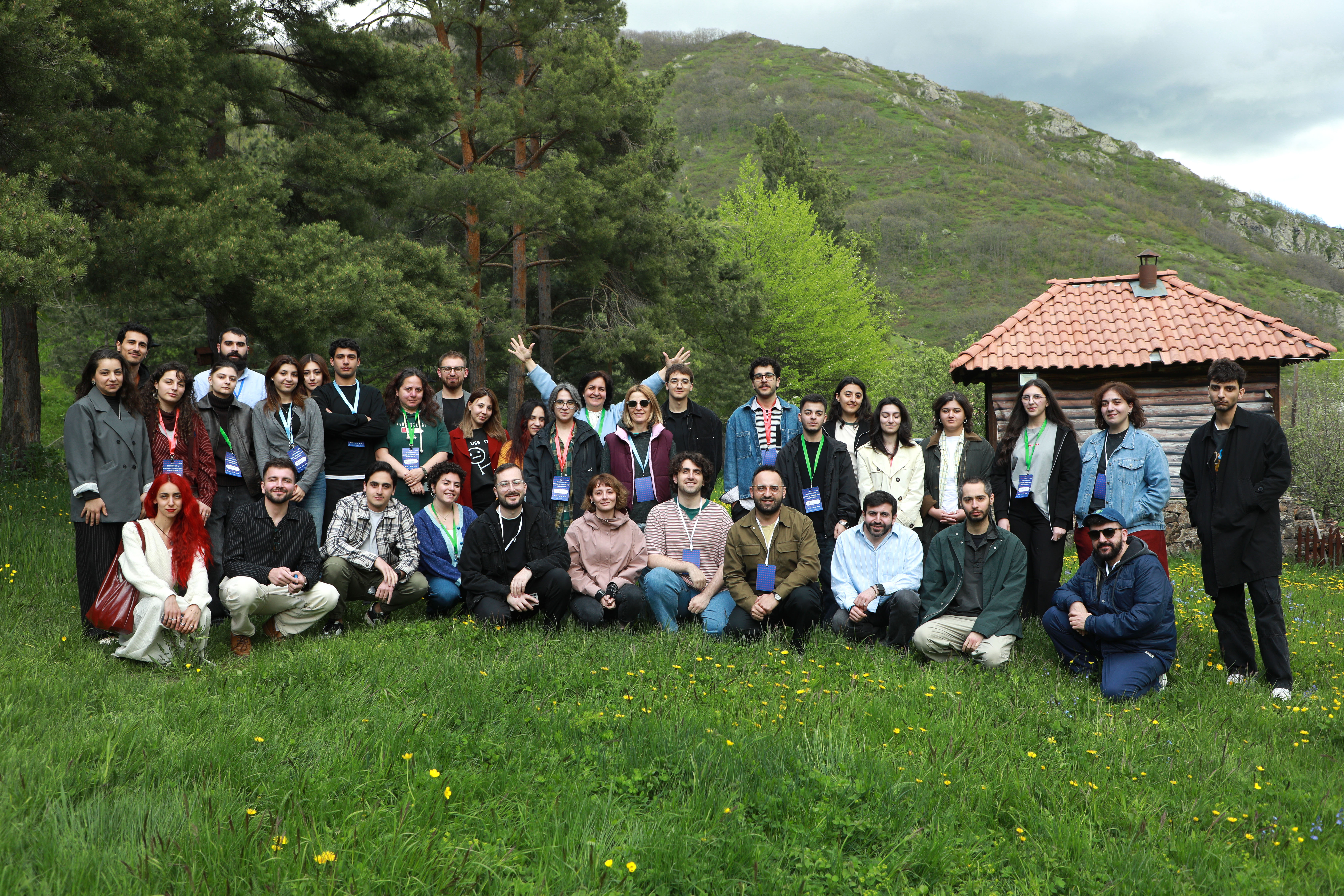
The three-day program, held from May 29 to 31 in Aghveran, combined lectures, discussions, and participatory workshops, creating a space for both critical reflection and experiential learning.
A historical grounding of electoral processes in Armenia was introduced through the lecture by Vardine Grigoryan, who traced their development from the 1990s to the present. Drawing on both statistical data and her personal experience as an election observer, she mapped the transformations of electoral practices, addressing mechanisms of fraud, as well as gradual shifts toward transparency. By approaching elections as lived experiences shaped by memory and public perception, she highlighted the evolving meanings attached to voting and its increasing significance as a civic act in contemporary Armenia. The discussion that followed further engaged participants with questions around democratic development and the role of participation, demonstrating how memory, the history of social practices, and the complex processes of democratisation intersect within Armenian society.
The philosophical and cultural dimensions of choice emerged as another key layer of inquiry through Tatevik Ghazaryan’s lecture. Moving from ancient contexts to contemporary societies, she engaged with philosophical perspectives on decision-making, responsibility, and agency. An interactive opening invited participants to reflect on their own associations with elections, setting the stage for a broader discussion on how choices are shaped. Drawing on historical, anthropological, and psychological insights, the lecture examined how decision-making evolves within increasingly complex environments, highlighting the role of manipulation, polarisation, and cognitive frameworks in shaping political choices and emphasising the importance of critical thinking in navigating these processes.
Each year, CSN Lab shapes the thematic focus of the school and curates its expert participation, aiming to approach what might be considered the “issue of the year” from multiple disciplinary and cross-sectoral perspectives. This year’s School was no exception. Within this broader inquiry, the formation of public perception within contemporary media environments became a central point of reflection.
Through international examples, Samvel Martirosyan examined how media ecosystems influence political attitudes and voter behaviour through coordinated information flows, including the use of digital tools, inauthentic platforms, and strategic narrative-building. His analysis highlighted how seemingly dominant public opinions are often constructed through complex mechanisms involving both local and transnational actors, emphasising the growing role of digital infrastructures and emerging technologies, as well as the importance of media literacy in navigating electoral realities.
Running like a red thread throughout School of Complex Past 2026 was the question of gender. This dimension was further explored through Mariam Khalatyan’s lecture on anti-democratic narratives in Armenia, based on research conducted by the Socioscope Research Centre. Her analysis focused on how civil society actors are targeted within pre-election contexts through delegitimising narratives and rhetorical strategies. Situated within broader democratic challenges, these processes revealed the pressures faced by civil society in highly polarised environments, as well as the lack of sufficient protections against hate speech, while reaffirming its ongoing role in sustaining democratic practices and addressing human rights concerns.
Another key thematic direction of the School addressed conspiracy theories as a persistent element within Armenia’s political, media, and cultural landscapes. Explored by CSN Lab for several years as a form of anti-democratic discourse, including through projects such as Davaditaran, this topic was revisited as part of the program’s broader inquiry.
In this context, Tigran Amiryan examined conspiracy theories and the crisis of trust as key dynamics shaping contemporary political realities. Drawing on interdisciplinary perspectives, he traced the historical development of conspiratorial thinking and analysed its role in shaping collective perception and political behaviour, highlighting how these narratives influence electoral processes and contribute to broader crises of trust within societies.
Questions of representation and inequality were further developed through Edgar Zatikyan’s focus on elections and gender dynamics. Drawing on his work within the Pink Human Rights Defender NGO, his lecture examined how gendered perceptions shape political participation, demonstrating how women are disproportionately targeted through appearance, behaviour, and modes of representation, while similar dynamics are normalised in relation to male political figures. Expanding the discussion to include minority groups, he addressed the circulation of discriminatory narratives and hate speech, as well as the limitations of formal mechanisms such as quotas, which do not always translate into substantive political change, emphasising the structural challenges of achieving inclusive representation within electoral systems.
A discursive perspective on elections was introduced through Rafik Santrosyan’s approach grounded in critical discourse analysis. Drawing on theoretical frameworks, he examined political discourse as a semiotic phenomenon, encompassing both linguistic and visual dimensions. By analysing electoral materials, including campaign posters and candidate imagery, he demonstrated how meaning is forged through the interaction of language, symbolism, and visual representation, highlighting the distinction between persuasive and manipulative discourse, as well as the role of narrative construction in shaping political realities.
The School itself was conceived as a combination of methods and approaches aimed at creating an open, participatory, and co-creative environment. In previous years, the program has included memory tours, facilitated conflict dialogues, open mic sessions, performative stagings, and other experimental formats. This year, the School also introduced a method of participatory reflection.
Within this framework, the program expanded beyond lectures through a participatory workshop structured as a simulation of electoral processes. Participants were divided into groups, each forming a fictional political party, tasked with developing political agendas and campaign strategies. Initiated at the end of the first day, the workshop created a space where theoretical discussions were translated into practical engagement with questions of representation and political positioning.
These explorations culminated in the presentation of participants’ campaign strategies, where contemporary challenges in Armenia were addressed through proposed solutions, reflecting both analytical and creative approaches to political communication. These discussions culminated in a simulation of elections where participants took part in a structured and transparent voting process. The simulation culminated in the election of one of the participant-formed parties, followed by a symbolic gesture that reframed political success as responsibility, emphasising governance as a practice grounded in service.
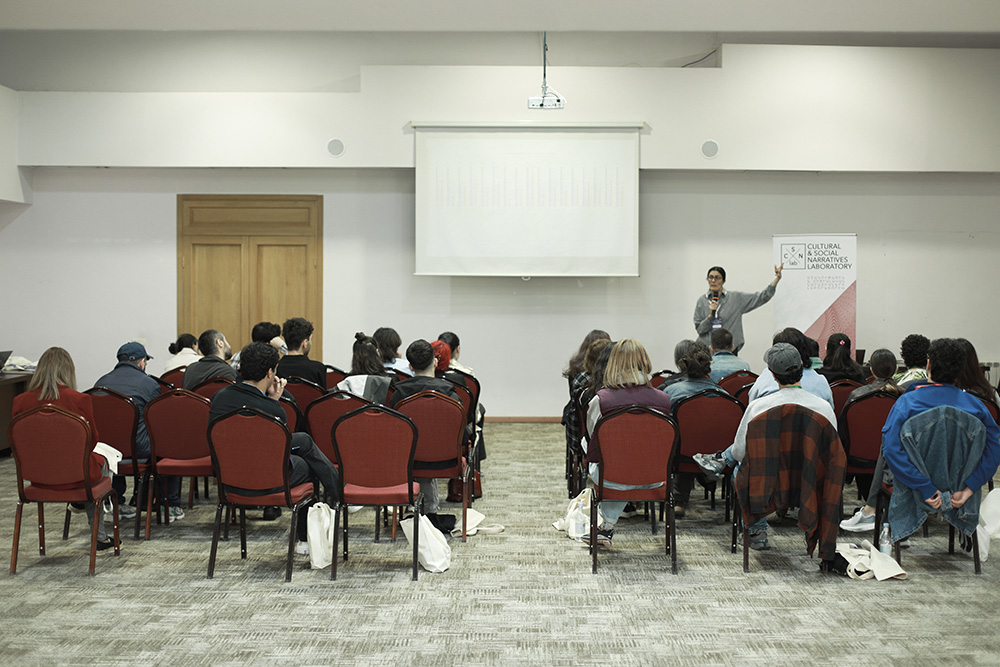
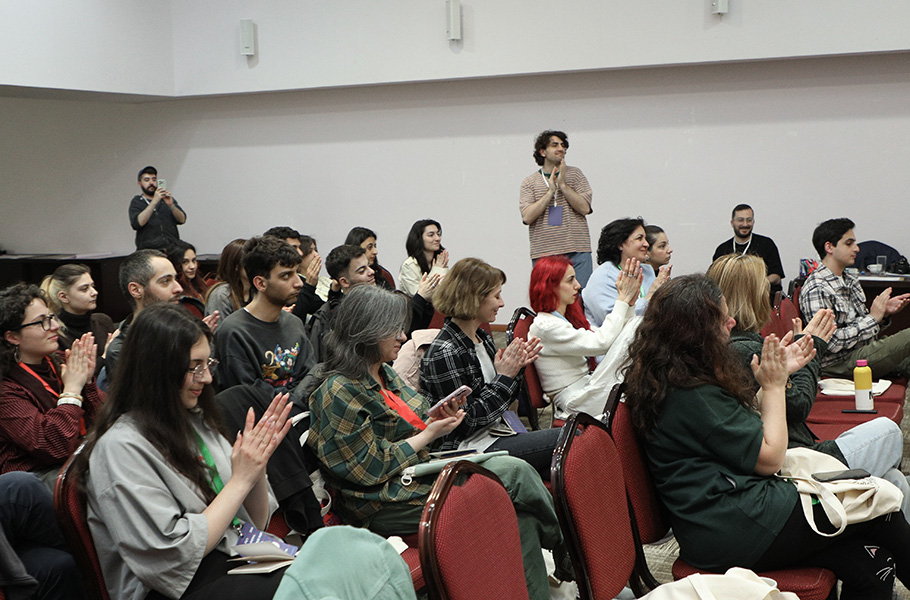
The School concluded with a collective reflection session, where participants shared their experiences and insights. The feedback emphasised the importance of addressing elections as a complex and urgent topic, as well as the value of engaging with it from multiple interdisciplinary perspectives. Participants highlighted the openness of the learning environment, the absence of hierarchical barriers, and the sense of community that emerged throughout the program.
Many noted that the combination of theoretical and practical components enabled a deeper understanding of electoral processes, while also encouraging critical engagement with political realities beyond the program. The discussions fostered a renewed interest in examining political discourse, public narratives, and the mechanisms shaping individual and collective choices.
Through the School of Complex Past: S/election/s, CSN Lab reaffirms its commitment to critically engaging with complex political and cultural processes through alternative education, creating spaces where knowledge, reflection, and collective inquiry intersect and contribute to more informed and engaged communities.
The School of Complex Past 2026 is implemented by the Cultural and Social Narratives Laboratory (CSN Lab) with the support of the New Democracy Fund (NDF), the Women’s Fund Armenia (WFA), and the Marion Dönhoff Foundation.