
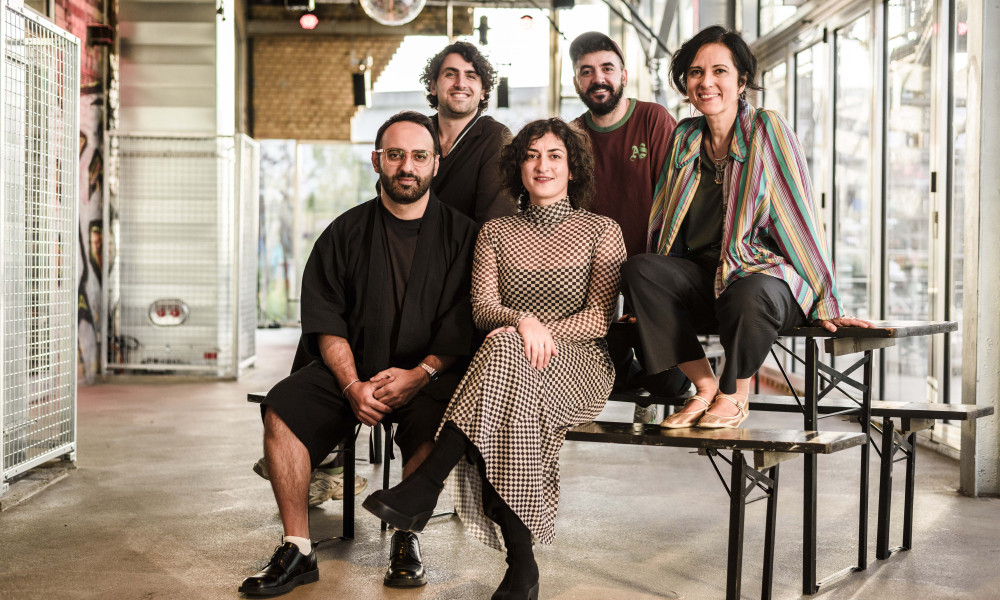
Continuing an emerging tradition of collaboration, CSN Lab and ZK/U – Center for Art and Urbanistics come together again in Berlin, this time creating a space for dialogue at the intersection of art, environment, memory and conflict.
CSN Lab’s ongoing programme We Lived in Each Other’s Houses, which aims to create spaces for dialogue in post-war and conflict-affected contexts, brings together Armenian and Azerbaijani artists and filmmakers to examine and question coexistence and separation, shared and divided landscapes, displacement and memory. On 9 September, artists and cultural practitioners gathered in ZK/U’s expansive hall around a question that resists a simple answer: what forms of dialogue remain possible within a geography of borders shaped by decades of conflict?
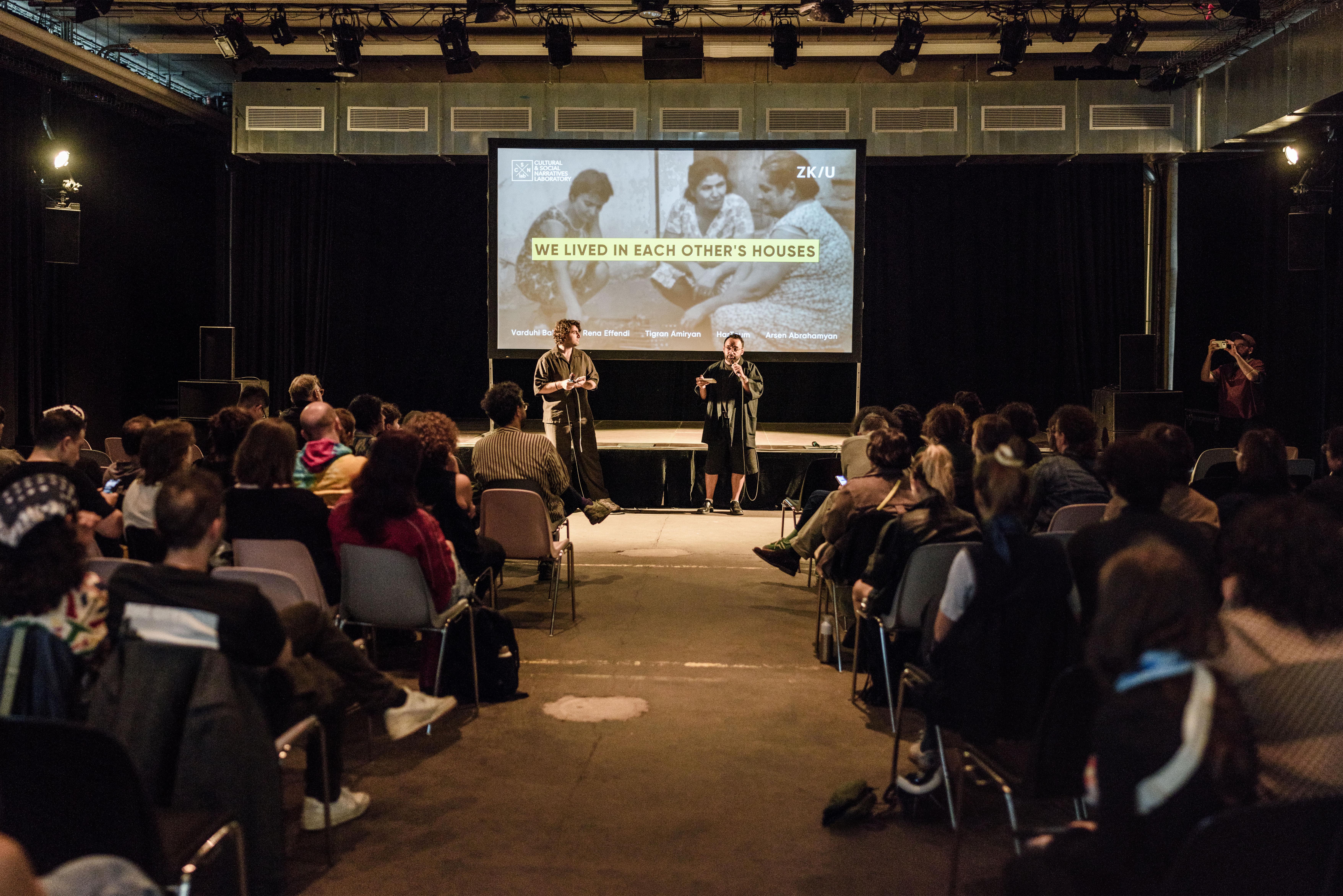
The title We Lived in Each Other’s Houses grows out of CSN Lab’s long-term engagement with personal memories and alternative narratives of Armenian–Azerbaijani coexistence. In their opening remarks, Tigran Amiryan and Arsen Abrahamyan turn to their personal experiences of living through different periods of the conflict and to the question of how war, displacement, silence and inherited narratives have shaped generations on both sides of the border. Beyond the narrative of conflict, however, there are stories of Armenians and Azerbaijanis living alongside one another, sharing neighbourhoods and everyday practices, and being friends. Quite literally, living in each other’s houses.
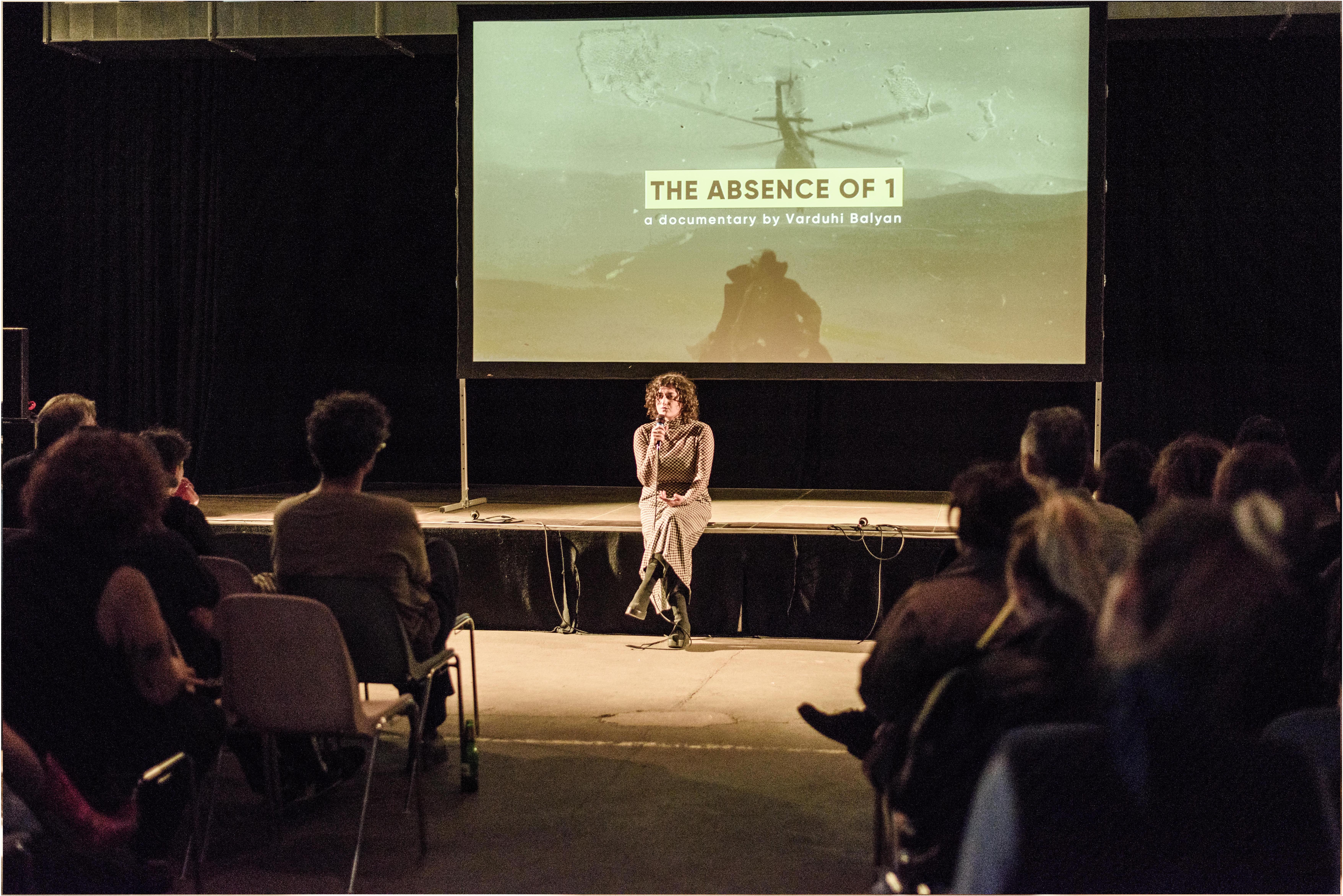
Home becomes one of the first spaces from which to approach this entangled history. In Armenian filmmaker and artist Varduhi Balyan’s documentary project In the Absence of One, the story of its protagonist, Arshak, opens questions around belonging, home and its boundaries, expanding them into landscape, geography and the memory of place. A short excerpt from the documentary already brings this question to the fore, revealing how political borders and territorial divisions penetrate deeply personal histories. In In the Absence of One, landscape becomes a space where the tensions of belonging, separation and absence are produced. What happens to life when its environment is fragmented? And what happens to memory when the geography to which that memory belongs becomes inaccessible?
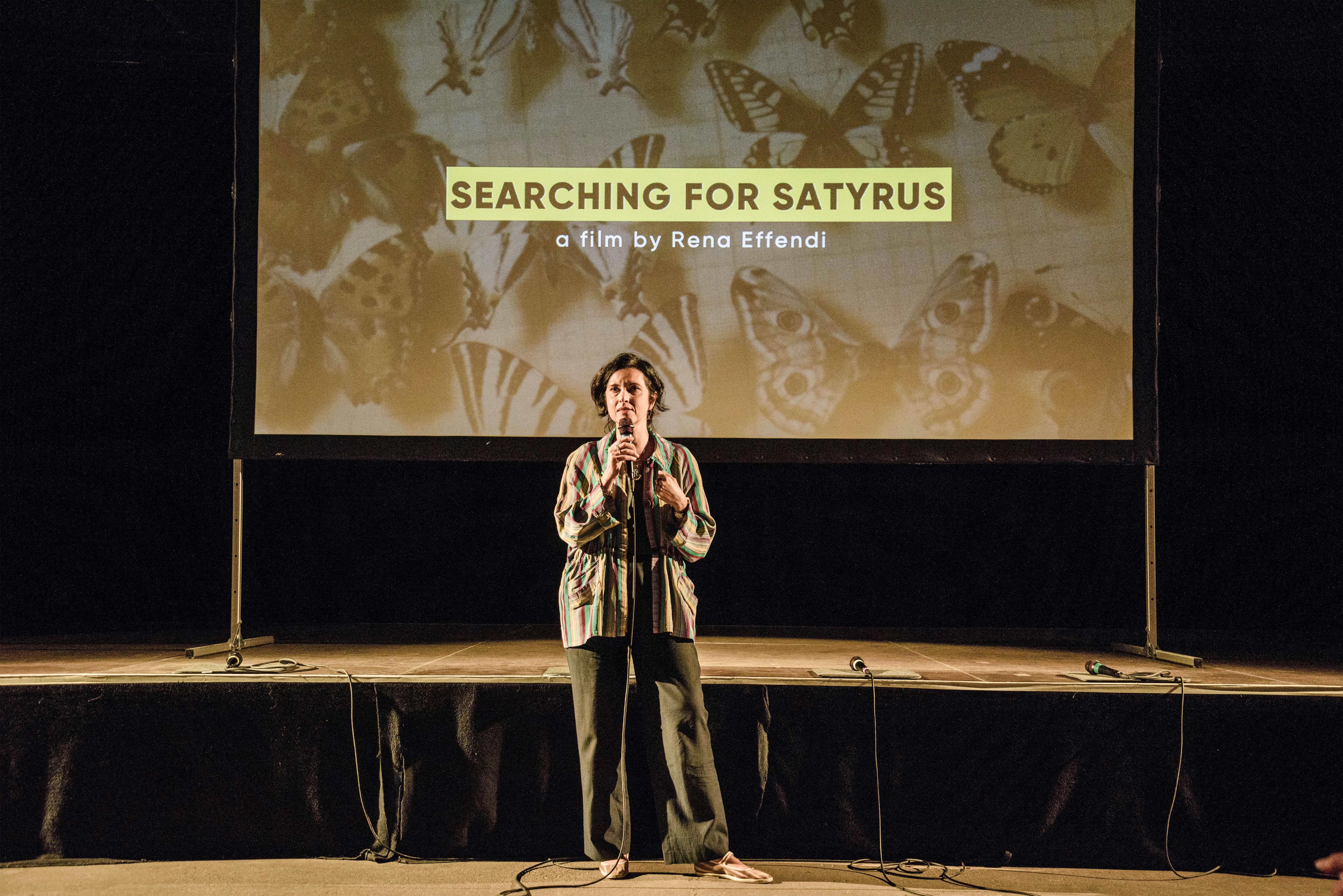
A different geographical horizon opens through Azerbaijani photographer and filmmaker Rena Effendi’s Searching for Satyrus. The search for the rare butterfly Satyrus effendi becomes a journey through the mountainous borderlands of the South Caucasus, where personal memory encounters political borders and the barriers of conflict and displacement. The search for a butterfly that crosses borders ultimately compels Rena Effendi herself to cross those borders and enter territories that had remained inaccessible for decades. Satyrus effendi becomes a companion on an intensely personal journey and experience, at the end of which lies not only the joy of finding the long-sought butterfly, but also the obscured narratives of the Armenian–Azerbaijani conflict and the possibility of peace. Placed alongside one another, the two projects turn landscape into an actor—a geography of memory.
The screenings were followed by a conversation with Varduhi Balyan and Rena Effendi, centred on one of the key complexities of cultural work in societies shaped by conflict and collective trauma: how can we find a language for speaking about violence and prolonged isolation without reproducing the language of conflict? Artistic practice is also a choice about what can be shown, what can be articulated, and what perhaps needs to remain unresolved.
Beyond images and narratives, this dialogue also moved into the space of informal conversation. A specially curated dinner by CSN Lab Creative Director Harutyun Tumaghyan brought guests—including members of the Armenian and Azerbaijani communities based in Berlin—together around one table, through different flavours, dishes and culinary traditions from across the region. The shared table became another way of thinking about coexistence. Familiar tastes and culinary references carry their own histories of movement, intimacy and exchange, making visible the cultural continuities that persist between societies divided by political conflict.
The Berlin event of “We Lived in Each Other’s Houses” was implemented by the Cultural & Social Narratives Laboratory (CSN Lab) in cooperation with ZK/U – Center for Art and Urbanistics, Berlin, with the support of the Trust for Mutual Understanding.
Photos © Florian Rosier